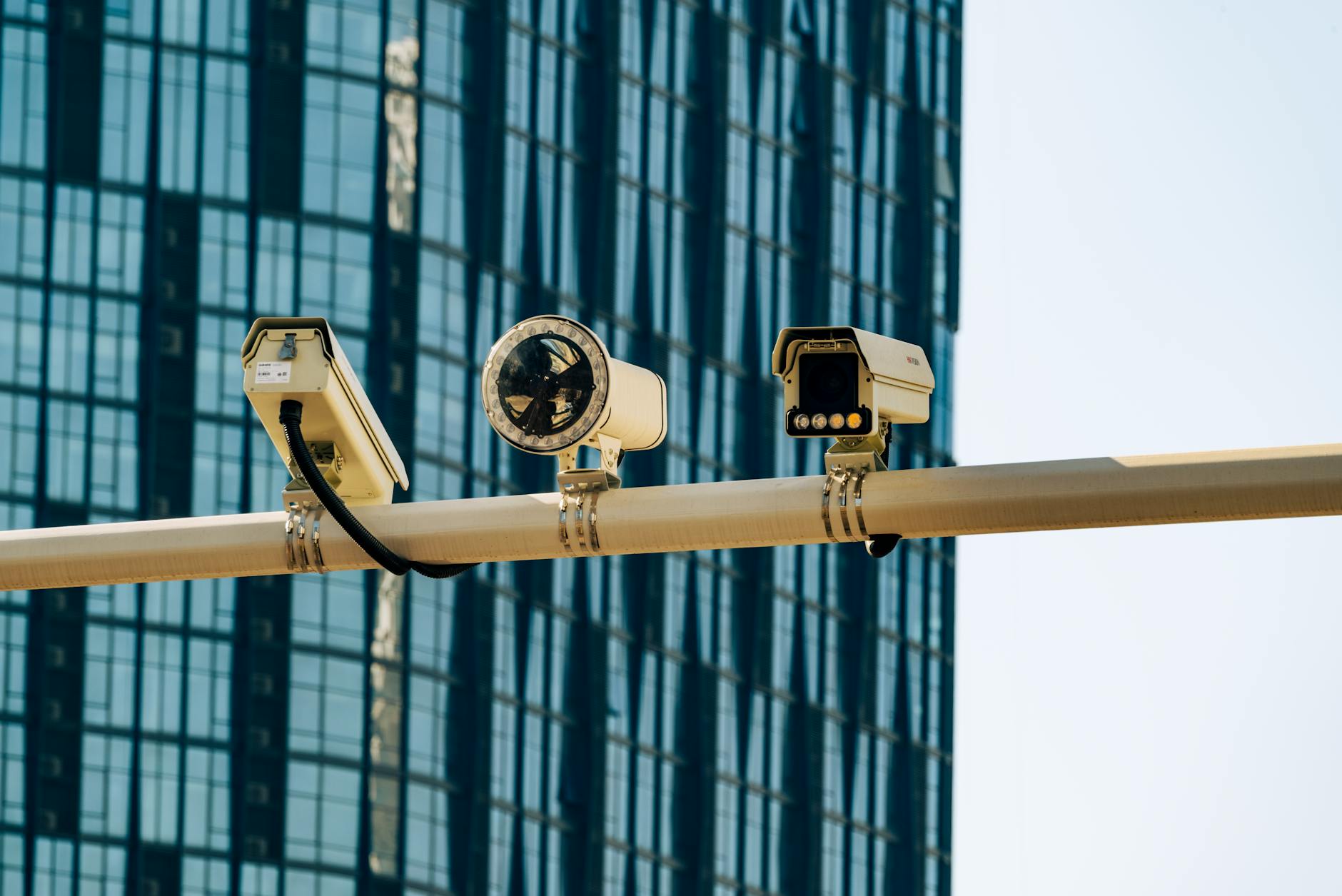
AI facial recognition cameras for banks are surveillance systems integrating computer vision and deep learning, capable of automatically identifying customers, cross-referencing blacklists, and recording all transactions as video metadata. In Vietnam, from Q1/2025, the State Bank of Vietnam (SBV) requires all branches to store transaction images for a minimum of 90 days, while also applying enhanced customer identification (KYC) measures to combat money laundering. This technology is being deployed in over 40% of joint-stock commercial bank branches in Ho Chi Minh City and Hanoi, with an average investment of 320-480 million VND per branch.
How do AI facial recognition cameras work in banks?
AI cameras at bank branches operate in a 4-step process: (1) 4-8MP IP cameras capture customer faces at teller counters; (2) The AI system extracts biometric features (faceprint) and compares them with internal databases or national blacklists; (3) Recognition results are tagged into the real-time video stream; (4) All data — including time, face, and transaction type — is stored in the VMS for a cycle of 90-365 days.
Unlike older analog cameras, this system does not require security staff to monitor screens 24/7, but automatically triggers alerts when detecting individuals on blacklists or unusual behavior (e.g., wearing a full mask, continuously covering the face). Solutions like AI Cameras for 2000m2 Factories: Early Smoke & Fire Detection & Production Protection apply similar AI mechanisms, but for banks, the focus is on facial recognition and compliance.
Why do bank branches need AI compliance cameras for transactions?
Compliance pressure from the SBV and the World Bank regarding KYC and AML is rapidly increasing. According to Circular 02/2024/TT-NHNN, branches must store transaction images for a minimum of 90 days and be able to present data within 24 hours upon request from investigative authorities.
AI cameras meet this requirement automatically: each transaction is assigned metadata including face ID, time, and transaction code — reducing investigation time from 3-5 days down to 15-30 minutes. Additionally, the system supports automatic cross-referencing with sanction lists updated monthly by the SBV, minimizing legal risks and administrative fines (current penalties up to 200 million VND for KYC violations).
Top 5 AI camera solutions for bank branches in 2026
Below are 5 AI camera solutions commonly deployed at Vietnamese commercial bank branches, with technical specifications and reference prices from An Ninh Số. The comparison table helps you choose a configuration suitable for a scale of 3-10 teller counters.
| Solution | Resolution | Integrated AI | Cloud Storage | Reference Price (VND/branch) |
|---|---|---|---|---|
| Hikvision AcuSense (DS-2CD2T46G2-ISU/SL) | 4MP (2688x1520) | Human/vehicle detection, basic face recognition | Hik-Connect (30 days free) | 320-380 million |
| Dahua WizMind 8MP (IPC-HFW5842H-ZHE) | 8MP (3840x2160) | Face recognition, people counting, behavior detection | Dahua Cloud (45 days) | 400-450 million |
| Suprema FaceStation F2 + BioStation 3 | 5MP (2592x1944) | Anti-mask face recognition, integrated KYC | Suprema Cloud (90 days) | 450-520 million |
| Hanwha Vision Wisenet 7 (XNP-6400) | 2MP (1920x1080) PTZ | AI object detection, face capture | Hanwha Cloud or ONVIF | 380-420 million |
| Avigilon H6A 8MP Bullet | 8MP (3840x2160) | Visual Alert AI, face recognition | Avigilon Cloud (60 days) | 500-580 million |
Specific benefits of AI cameras in KYC/AML compliance
AI facial recognition cameras bring 4 main benefits for bank compliance: KYC automation, reduced manual errors, faster investigations, and support for periodic reporting. Each benefit has specific measurable data.
- KYC Automation: The system automatically captures customer faces at the counter, cross-references them with ID cards stored in the core banking system, reducing authentication time from 3-5 minutes to 10-20 seconds.
- Reduced Manual Errors: According to an internal report from a joint-stock commercial bank in Ho Chi Minh City, the error rate in KYC data entry decreased by 65% after 6 months of deploying AI cameras.
- Faster Investigations: Retrieval time for disputed transactions decreased from 3-5 days to 15-30 minutes thanks to automatically tagged metadata.
- Reporting Support: The system automatically generates reports on transactions involving blacklisted individuals, serving internal audits and regulatory bodies.
Criteria for selecting AI cameras for bank branches
When choosing an AI camera solution for banks, 5 criteria need evaluation: resolution, AI capability, storage, VMS integration, and cost. Each criterion directly impacts compliance effectiveness.
- Resolution: Minimum 4MP for teller counters, recommended 8MP for crowded areas. High resolution ensures accurate facial recognition even when customers wear masks or glasses.
- AI Capability: Must support real-time face recognition, abnormal behavior detection (covering face, turning away), and dynamic blacklist integration.
- Storage: Must meet the SBV's 90-day requirement, prioritize hybrid solutions (local + cloud storage) for redundancy.
- VMS Integration: The system must be compatible with existing VMS (Milestone, Genetec, HikCentral) for centralized management.
- Cost: Budget of 320-580 million VND for a branch with 3-10 counters, including cameras, VMS, and deployment costs.
AI camera deployment process at banks
Deploying AI facial recognition cameras at banks consists of 5 steps: survey, design, installation, AI configuration, and acceptance testing. Average time is 3-5 weeks per branch.
Step 1 — Survey: Measure the teller counter space, determine camera positions (capture angle covering the entire customer face, avoiding backlight). Step 2 — Design: Draw camera layout diagrams, calculate network bandwidth and storage capacity (minimum 10TB for 90 days with 4 4MP cameras). Step 3 — Installation: Run PoE network cables, install cameras, connect switches and VMS. Step 4 — AI Configuration: Upload blacklists, set recognition thresholds (typically 85-90%), configure real-time alerts. Step 5 — Acceptance Testing: Verify recognition accuracy (minimum 95%), alert response time (under 2 seconds), and data retrieval capability.
Frequently asked questions about AI facial recognition cameras for banks
Do AI facial recognition cameras meet the SBV's 90-day storage requirement?
What is the cost of installing AI cameras for a bank branch?
Can AI cameras integrate with existing core banking systems?
Are AI facial recognition cameras accurate when customers wear masks?
How long does it take to deploy AI cameras for a bank branch?
Can AI cameras detect transaction fraud behavior?
Need advice on AI facial recognition camera solutions for your bank branch? Contact An Ninh Số immediately via hotline 0796 700 777 or email [email protected] for a free survey and detailed quote within 24 hours.