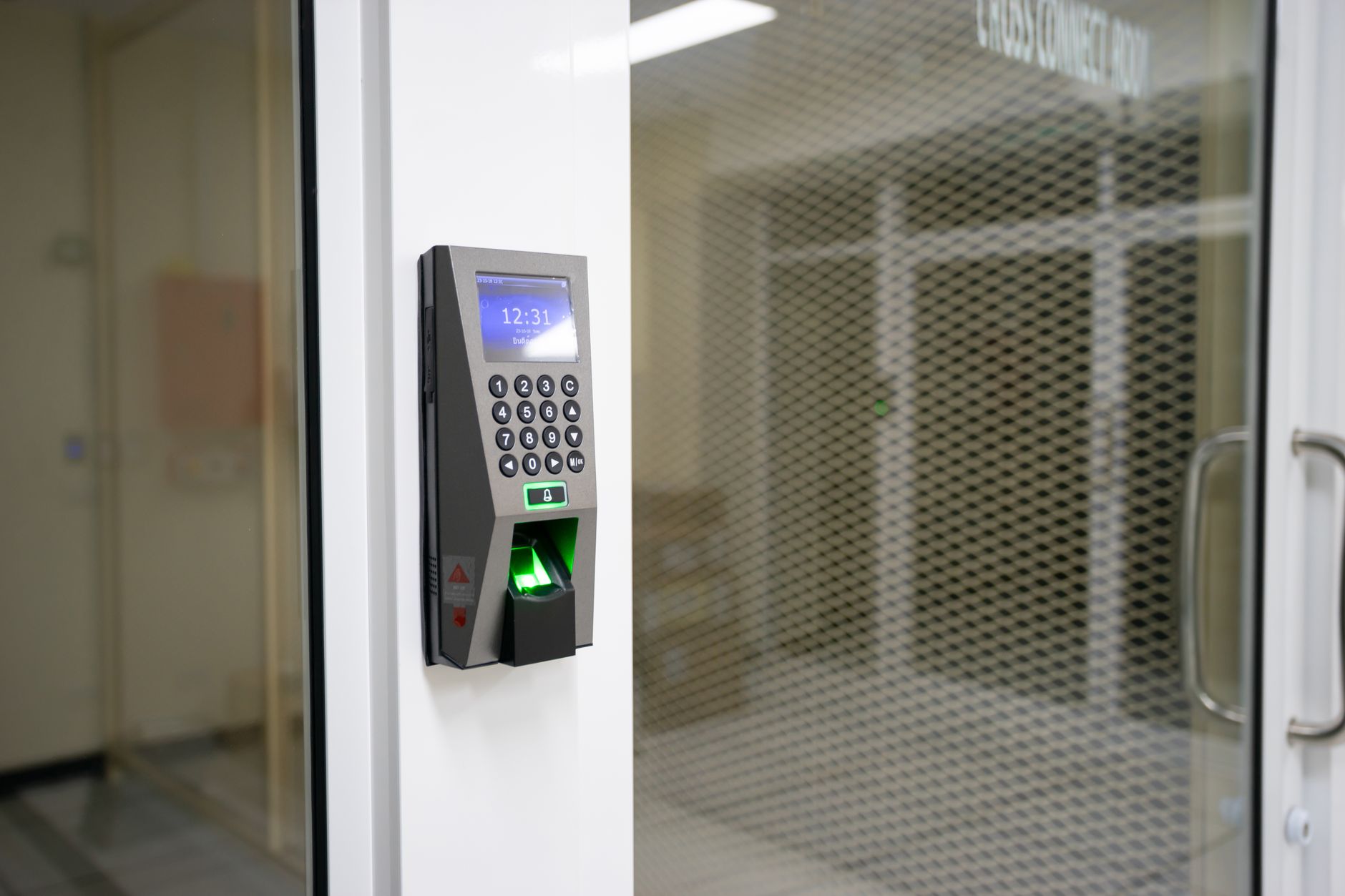
Facial recognition technology for office buildings is a biometric authentication solution that uses AI cameras and deep learning algorithms to identify employees and visitors in real time. In Vietnam, Face ID systems are gradually replacing swipe cards and fingerprints thanks to processing speeds under 0.5 seconds and superior anti-spoofing capabilities, particularly suited for buildings with 500-2,000 entries per day.
Facial recognition technology for office buildings uses AI cameras and deep learning algorithms to authenticate employee identities in 0.2-0.5 seconds, replacing swipe cards and fingerprints. The solution speeds up entry, prevents impersonation, and integrates with time attendance, visitor management, and restricted area control.
How does facial recognition for office buildings work?
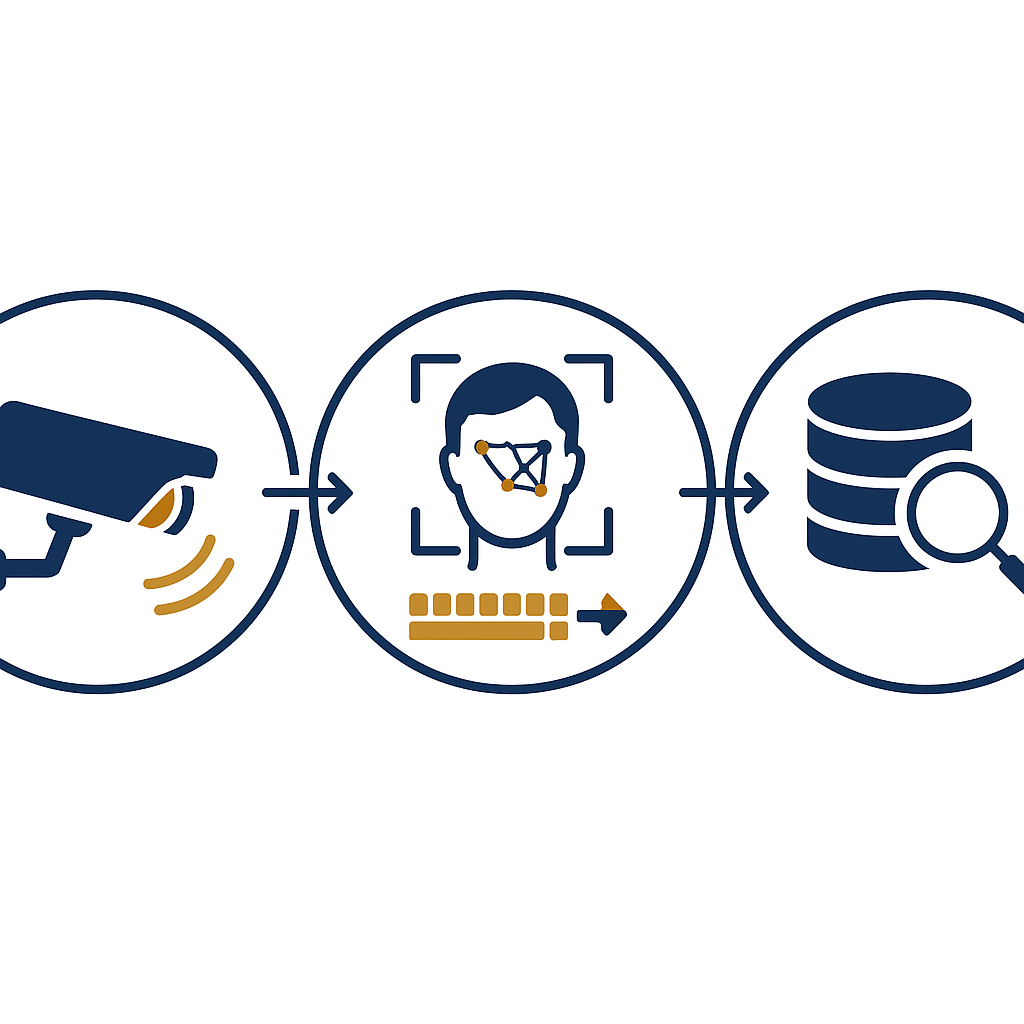
A facial recognition system for office buildings operates in a 4-step process: face detection from IP cameras, extraction of geometric features (eye, nose, jaw distances), conversion into a 128-512 dimensional mathematical vector, then comparison with the registered database. The entire process takes 0.2-0.5 seconds on edge devices.
Unlike conventional recording cameras, AI facial recognition cameras use a neural processing unit (NPU) integrated directly on the device, such as ZKTeco SpeedFace or Hikvision DeepInView. This allows image frames to be analyzed on-site without sending the entire video to a server, reducing latency and bandwidth costs.
- Step 1 - Detection: The AI camera scans the door area, finding a bounding box around a person's face.
- Step 2 - Extraction: Deep learning algorithms (typically CNN networks) extract 128-512 distinct biometric features.
- Step 3 - Encoding: Features are converted into a mathematical vector; original images are not stored — ensuring personal data security.
- Step 4 - Matching: The vector is compared against the employee database, achieving a 99.5% recognition rate even when wearing glasses or with changed hairstyles.
Comparing facial recognition with swipe cards and fingerprints
Related Products




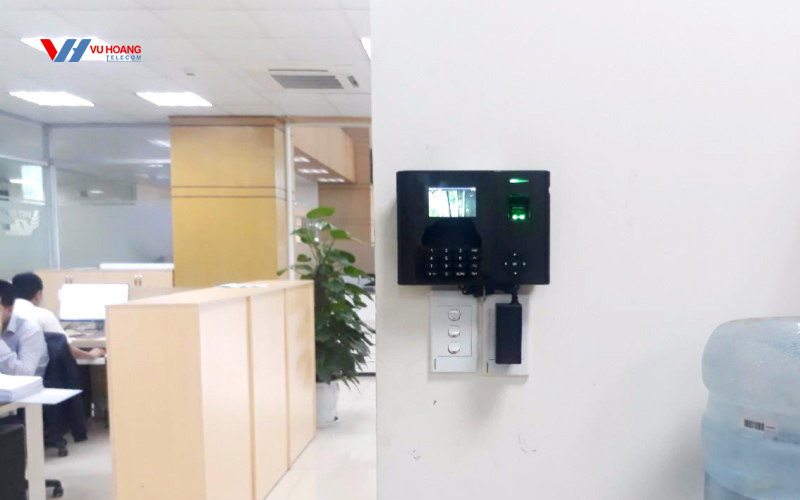
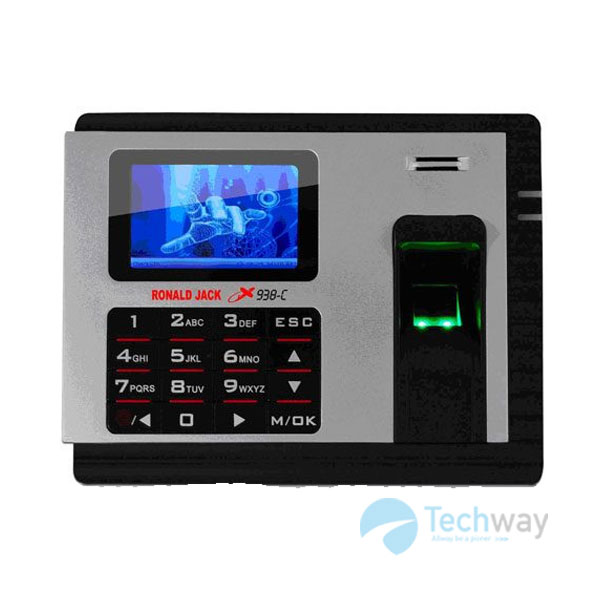

When evaluating facial recognition technology for office buildings, the most important criteria are speed, accuracy, and anti-spoofing capability. Compared to swipe cards (which can be lost or lent) and fingerprints (easily affected by sweat or scratches), Face ID excels in all three aspects.
| Criteria | Facial Recognition | Fingerprint | RFID Swipe Card |
|---|---|---|---|
| Authentication speed | 0.2-0.5 seconds | 0.5-1.0 seconds | 0.3-0.8 seconds |
| Physical contact | Contactless | Contact required | Contact required (swipe/tap) |
| Anti-spoofing | High (resists fake photos/videos) | Medium | Low (easily lost/lent) |
| Hygiene and safety | High | Low | Medium |
| Equipment cost | 8-25 million VND/point | 3-8 million VND/point | 2-5 million VND/point |
Specific benefits of deploying Face ID for offices

Implementing facial recognition technology for office buildings brings 4 measurable benefits: reducing peak-hour congestion by 15-20 minutes, eliminating card printing costs (about 10-30 million VND/year for a 300-employee building), enhancing restricted area security, and automating time attendance data.
The biggest difference compared to traditional systems is the ability for proactive recognition. AI cameras placed in the lobby can scan the faces of everyone entering without requiring them to stop and swipe a card. Employees walk through the gate, the system automatically opens the door and records entry time — a seamless, uninterrupted experience.
According to deployment records at Grade A office buildings in Ho Chi Minh City, Face ID systems reduce waiting time at entrances by 60-80% compared to card swiping. Additionally, time attendance data is synced in real time to HR software, eliminating errors caused by employees forgetting cards or asking others to clock in for them.
Summary table of key terms
When researching facial recognition technology for office buildings, you will encounter the following technical terms. Understanding them helps you communicate accurately with suppliers.
| Term | Definition | Practical example |
|---|---|---|
| Deep Learning | Artificial neural network algorithms that learn from millions of images | CNN model on the NPU chip of ZKTeco cameras |
| Anti-spoofing | Ability to detect fake faces (printed photos, videos, 3D masks) | Hikvision cameras refuse to open doors when a screen photo is used |
| Edge Computing | Data processing directly on the device, not sent to the cloud | Suprema FaceStation terminals process offline |
| Liveness Detection | Checks that the face is a real person (blinking, head movement) | Terminals require users to smile for authentication |
Common mistakes when installing facial recognition systems
Many Vietnamese businesses make common mistakes when deploying facial recognition technology for office buildings, including