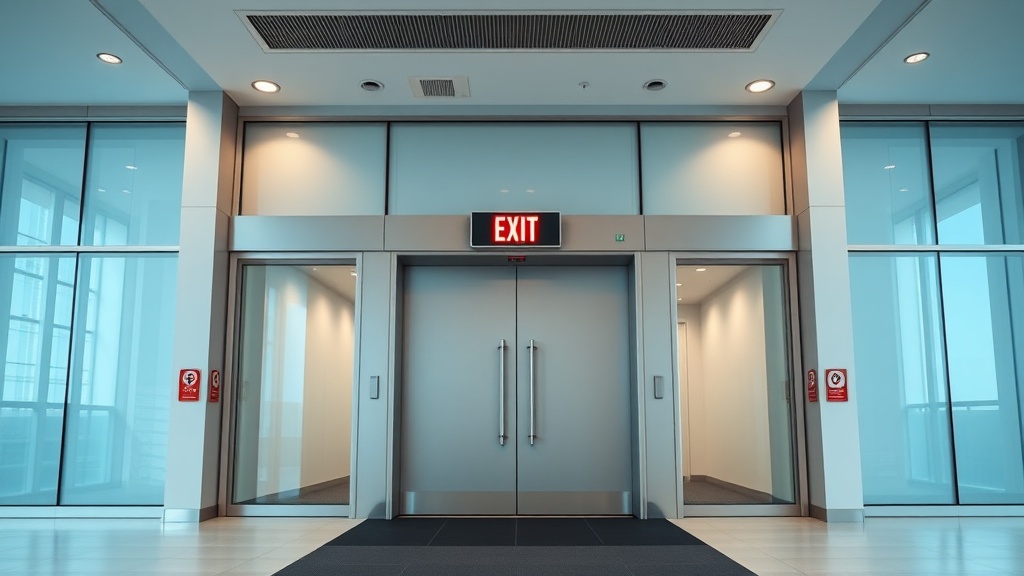
The fire-safety automatic door DIN 18650 is an automatic door system designed and certified to meet the German DIN 18650 standard, combining emergency escape functionality with daily automatic operation. In Vietnam, from 2026, buildings with 10 floors or more and shopping centers over 5,000 m² are required to be equipped with this standard-compliant emergency exit door according to the new circular from the Ministry of Construction.
What is a fire-safety automatic door DIN 18650?
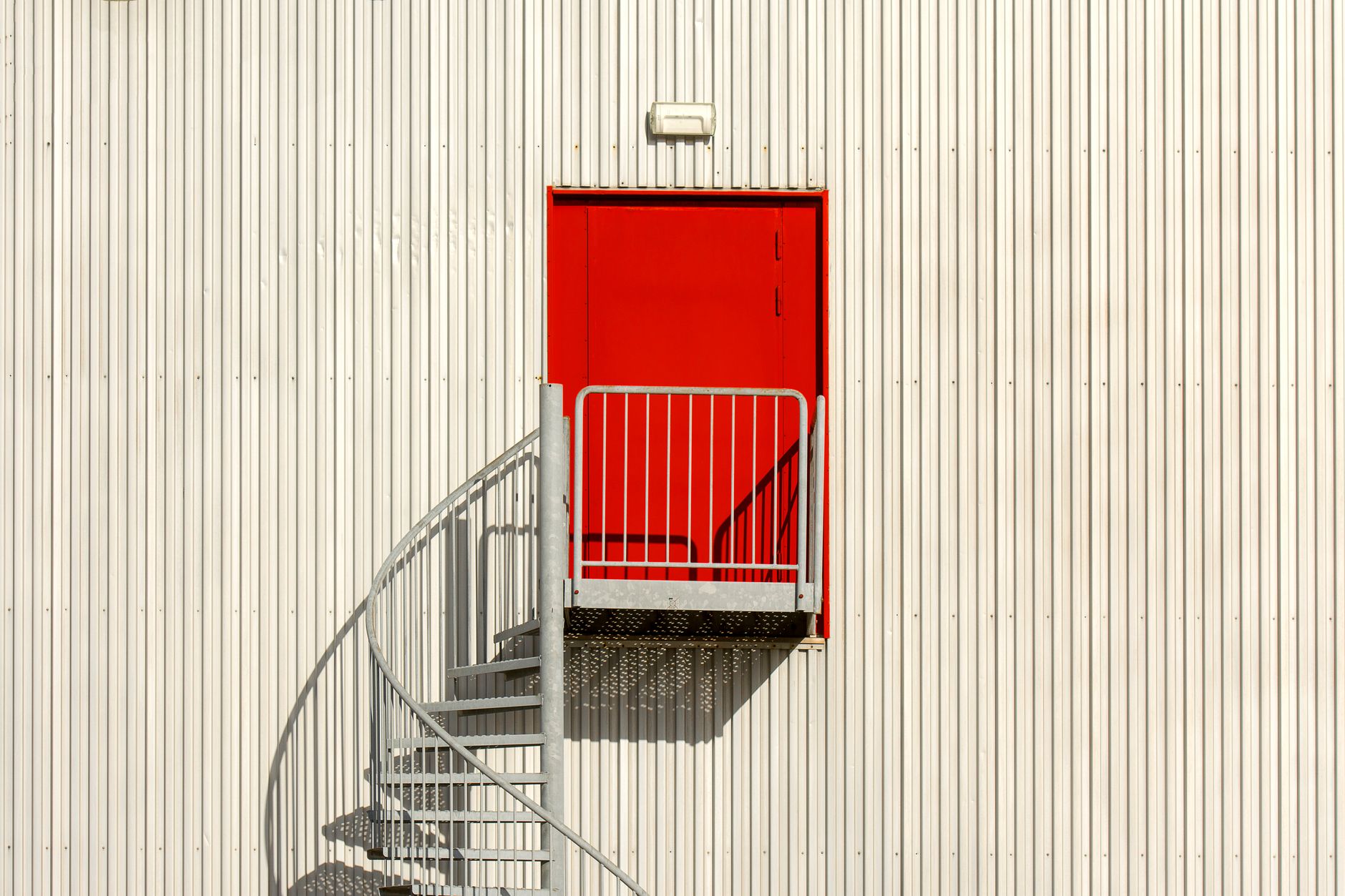
A fire-safety automatic door DIN 18650 is a type of automatic sliding or revolving door certified according to the DIN 18650 standard, integrating an emergency escape system. Upon receiving a fire alarm signal, the door automatically opens fully and remains in the open state, ensuring a clear escape route for a minimum of 60 minutes.
The DIN 18650 standard, issued by the German Institute for Standardization (DIN), specifies fire safety requirements for automatic doors. Unlike conventional automatic doors that only serve daily entry and exit purposes, DIN 18650 doors must simultaneously fulfill two functions: automatic operation under normal conditions and switching to escape mode during an incident.
The core component of this system is the control unit with an integrated backup battery and heat/smoke detectors. Upon receiving a signal from the central fire alarm system, the control unit disconnects the main power supply, activates the backup battery, and commands the door to open fully.
Mandatory technical requirements according to DIN 18650
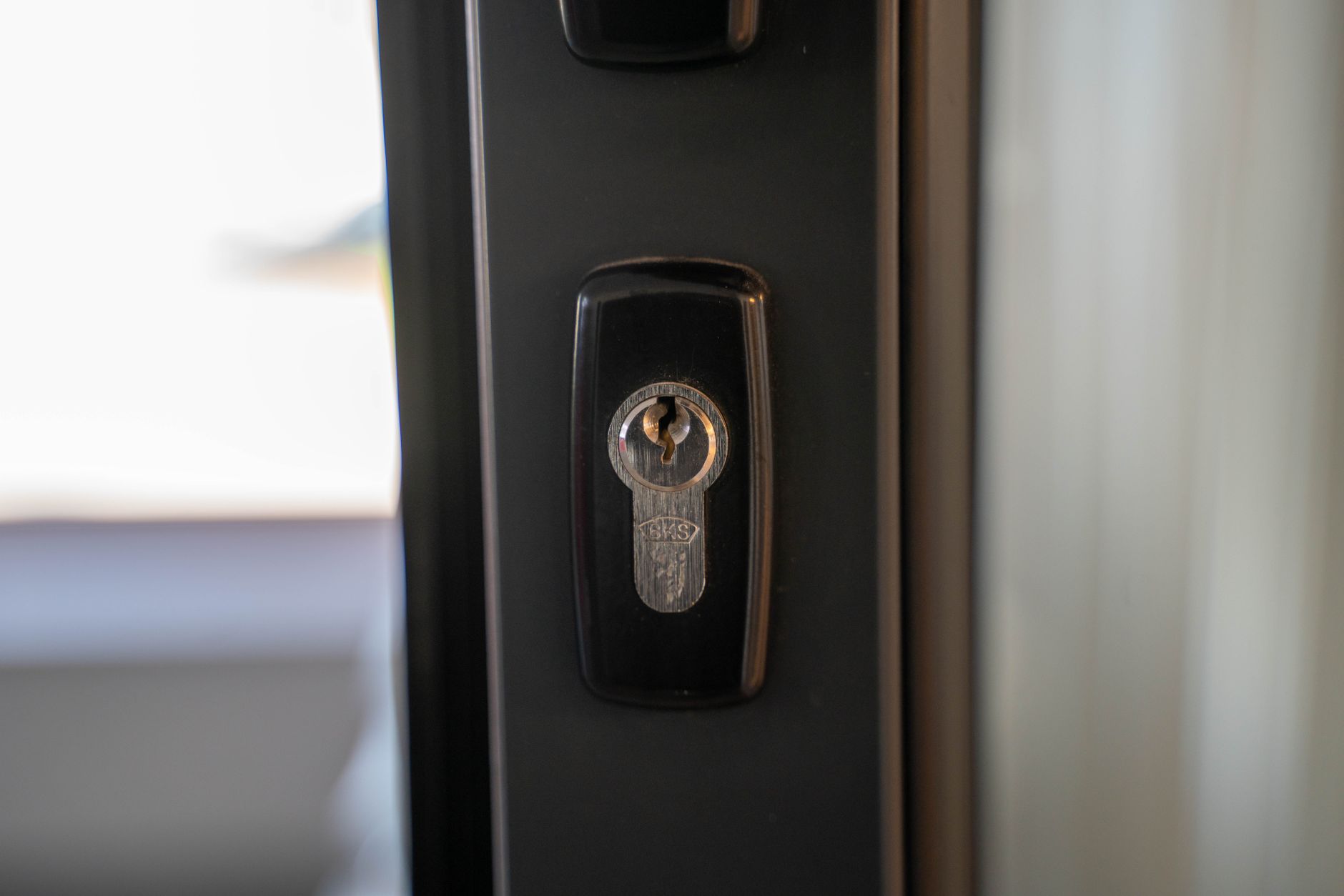
A fire-safety automatic door DIN 18650 must meet 5 main technical requirements: a motor with a backup battery operating for 60 minutes, a panic bar meeting EN 1125, dual heat/smoke detectors, fire-resistant material EI60/EI120, and integration with the central fire alarm system via dry contact.
1. Motor and backup battery
The door motor must be capable of opening the door fully within 3-5 seconds upon receiving an emergency signal. The backup battery must maintain operation for a minimum of 60 minutes in standby mode and perform 10-15 open/close cycles. Common motor series meeting this requirement include GEZE Slimdrive, Dorma ES 200, and Came ZK2.
2. Panic bar meeting EN 1125
The panic bar is a device that allows the door to be opened by pushing lightly from the inside. According to DIN 18650, this bar must be certified to EN 1125, with a minimum length equal to 60% of the door width. The push force required to activate it must not exceed 80 N (equivalent to 8 kg).
3. Dual heat/smoke detectors
The system must be equipped with at least 2 detectors: one photoelectric smoke detector and one rate-of-rise heat detector. The smoke detector detects smoke density from 0.5-5% obs/m, while the heat detector activates when the temperature rises above 15°C/minute or reaches a threshold of 70°C.
4. Fire-resistant material EI60/EI120
The door leaf and frame must be made of fire-resistant material achieving grade EI60 (fire resistance for 60 minutes) or EI120 (120 minutes) according to TCVN 9383:2012 standard. Common materials include galvanized steel sheet 1.2-1.5 mm thick, wire mesh or gel-type fire-resistant glass, and intumescent seals.
5. Integration with fire alarm system
The door must be connected to the central fire alarm system via dry contact or Modbus protocol. Upon receiving a signal from 2 or more fire detectors in the same area, the door automatically switches to escape mode.
Inspection procedure for DIN 18650 doors
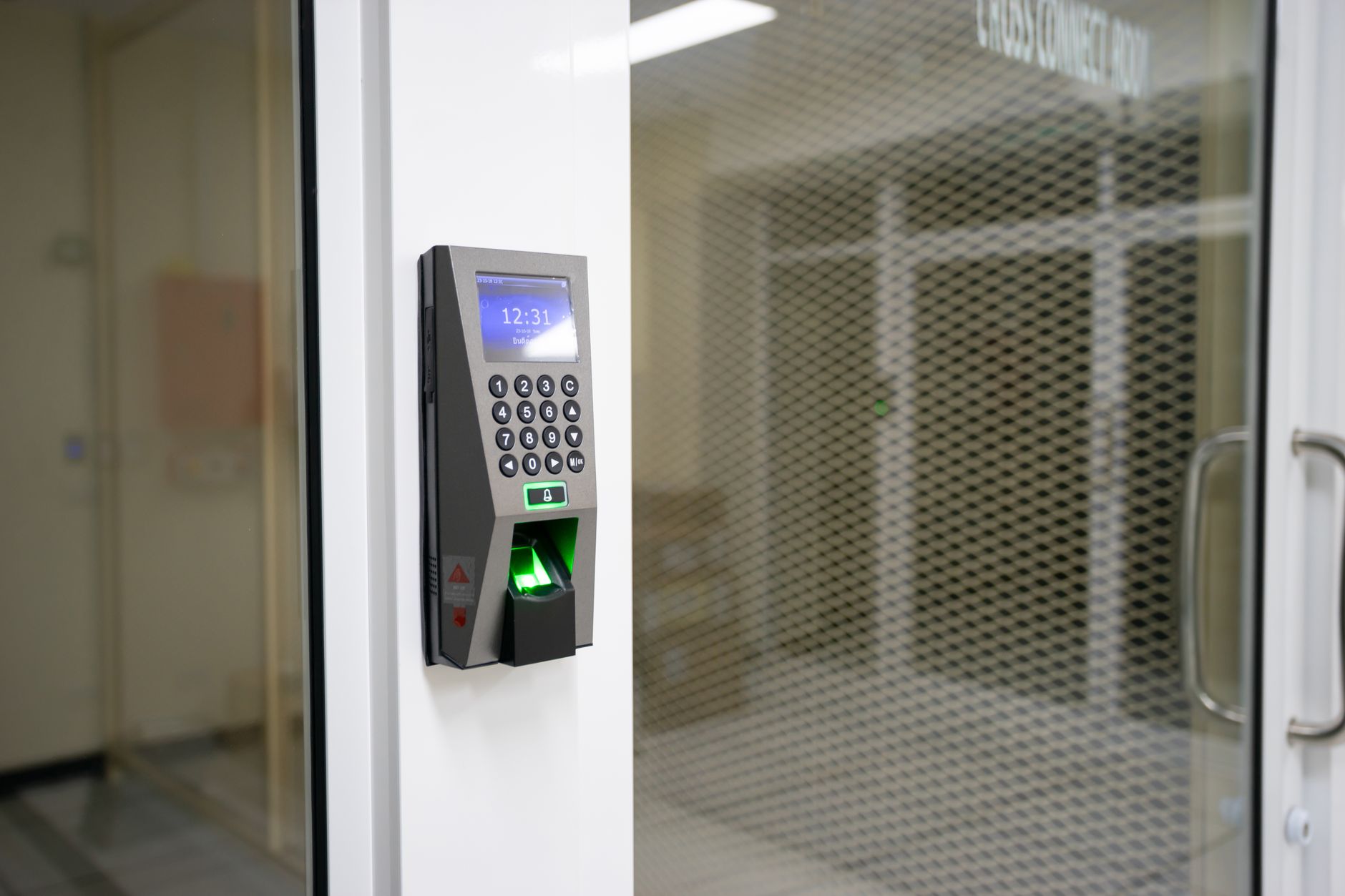
Inspection of fire-safety automatic doors DIN 18650 is carried out periodically every 6 months, including mechanical, electronic checks, and fire scenario simulations. The inspection steps are detailed in Appendix B of the standard.
- Mechanical check: Measure the push force of the panic bar (≤80 N), check the wear of the sliding rail, and confirm the door opening travel reaches 100% of the clear width.
- Electronic check: Check the backup battery (capacity ≥80% of design), measure the emergency door opening time (3-5 seconds), and confirm the connection signal with the fire alarm system.
- Fire scenario simulation: Simulate activation of a fire alarm signal from 2 detectors, measure the time for the door to open fully, and check the hold-open mode for 60 minutes.
- Intumescent seal check: Confirm the seal is intact, not deformed, and capable of expanding when exposed to temperatures of 150-200°C.
Comparison table: DIN 18650 automatic door vs. Standard door

A detailed comparison of 6 criteria between fire-safety automatic doors DIN 18650 and conventional automatic doors, helping businesses make investment decisions suitable for 2026 fire prevention requirements.
| Criterion | DIN 18650 Door | Standard Automatic Door |
|---|---|---|
| Fire resistance time | 60-120 minutes (EI60/EI120) | Not required |
| Backup battery | Minimum 60 minutes | 15-30 minutes |
| Panic bar | EN 1125 mandatory | Not mandatory |
| Detectors | Dual smoke + heat | Motion sensor only |
| Fire alarm integration | Dry contact/Modbus | None |
| Installation cost | 25-45 million VND/leaf | 8-15 million VND/leaf |
Benefits of DIN 18650 doors for Vietnamese buildings
Installing fire-safety automatic doors DIN 18650 brings 4 main benefits: compliance with 2026 fire prevention regulations, 30-50% reduction in evacuation time, increased property value, and reduced fire insurance premiums.
- Regulatory compliance: From 2026, buildings not meeting the DIN 18650 standard may face fines of 50-100 million VND and operational suspension according to Decree 136/2020/ND-CP.
- Reduced evacuation time: According to a case study at a Grade A office building in Ho Chi Minh City, evacuation time for 500 people decreased from 8 minutes to 4.5 minutes after installing DIN 18650 doors.
- Increased property value: Buildings meeting the fire-safety DIN 18650 standard have rental prices 15-25% higher than buildings meeting only minimum standards.
- Reduced insurance premiums: Insurance companies such as Bao Viet, PVI reduce fire insurance premiums by 10-15% for buildings equipped with DIN 18650 standard doors.
Case study: Grade A office building in Ho Chi Minh City
A 25-story office building in District