TL;DR
GDPR camera workplace compliance requires FDI from the US-EU in Vietnam to comply with Article 6 (legitimate interest), Article 9 (biometric ban), retention of 30-90 days, clear notice, and full access logs. Axis ARTPEC-9 firmware EU-certified and Bosch IVA Pro Context edge AI help reduce cloud transfer by 60-80%, with automatic audit trails, meeting GDPR without slowing operations. Compliance costs increase by 15-25% compared to regular cameras but avoid fines of up to 4% of global revenue.
Why must US-EU FDI in Vietnam comply with GDPR camera workplace?
FDI from the US-EU deploys cameras at factories in Vietnam subject to GDPR if processing EU employee data (expat, remote audit) or European HQ requires global compliance. GDPR fines up to 4% of global revenue — a manufacturing business with $500M revenue could lose $20M if violated.
Article 6 GDPR requires clear legitimate interest: occupational safety, asset protection, fraud prevention. Article 9 prohibits processing biometric (facial recognition) unless explicit consent or legal exceptions such as national security. Video retention maximum 30-90 days depending on purpose — general surveillance 30 days, incident investigation 90 days.
An Ninh Số observes that 70-80% of US-EU FDI in Vietnam lack clear retention policies, storing video for 6-12 months due to large NVR capacity — violating GDPR minimization principle. Audits from EU HQ detect this issue in 80% of inspection cases in 2025.
[Smart AI cameras](/giai-phap/camera-ai/) need automatic deletion retention configuration, detailed access logs, and clear workplace notices to meet GDPR without slowing operations.
GDPR Article 6 + Article 9: How to Apply for Workplace Cameras?
Article 6 GDPR allows processing of personal data when there is a legitimate interest — FDI needs to clearly document the purpose: occupational safety (monitoring hazardous areas), asset protection (raw material warehouses), fraud prevention (shrinkage 2-5% of revenue). The balancing test requires that business interests do not override employee privacy rights — cameras in toilets/changing rooms are strictly prohibited.
Article 9 prohibits biometric processing unless there is explicit consent or an exception. Facial recognition for access control requires separate consent from each employee — it cannot be mandatory. Time attendance using face ID must have an opt-out alternative (RFID card, fingerprint). Vendor public claims show that 60-70% of EU FDI are switching from face ID to RFID cards to avoid Article 9 complexity.
Notice requirement: clear signage at entrances, detailed privacy policy on purpose/retention/access, employee training on GDPR rights (access, rectification, erasure). Tier-1 enterprise companies in Vietnam often use QR codes on signage linking to the privacy policy — cost $200-500 for signage + translation.
[Axis Communications](/thuong-hieu/axis-communications/) ARTPEC-9 firmware supports automatic privacy masking — blurring sensitive areas in real-time before video storage, meeting GDPR minimization without requiring post-processing.
Camera workplace requirements: notice, retention, access log
Notice must be clear and accessible: signs at every entrance with cameras, font ≥24pt, local language + English. Detailed privacy policy: purpose (safety/asset protection), retention (30-90 days), who has access (security team, HR when needed), contact DPO. Cost for signage + policy drafting $1,000-3,000 for a 50,000m² factory.
Automatic retention: NVR/VMS configured with auto-delete after 30-90 days depending on zone. General production area 30 days, raw material warehouse 60 days, entrance/exit 90 days (longer for incident investigation). Industry estimates show 40-60% of FDI companies lack automatic retention policies, relying on manual delete — high risk during audits.
Detailed access log: who viewed which video, when, and why. Enterprise VMS like [Bosch Security](/thuong-hieu/bosch-security/) Video Management System logs every playback, export, and share — full audit trail for GDPR Article 30 record keeping. Cost for enterprise VMS $5,000-15,000 for 100-200 cameras, including access control integration.
Subject access request (SAR): employees have the right to request viewing videos containing themselves within 30 days. FDI needs a SAR response process ≤30 days, blurring others in the frame (third-party privacy). Technical teams often deploy Milestone XProtect Smart Search to quickly find specific individuals — reducing SAR response time by 70-80% compared to manual review.
### Edge processing reduces GDPR risk
Edge AI processes video at the camera, sending only metadata/alerts to the cloud — reducing data transfer by 60-80%, lowering breach risk when cloud is compromised. [Axis ARTPEC-9](/blog/axis-artpec-9-vs-bosch-cpp16-chip-premium-eu-2026/) runs object detection onboard, sending only "person detected zone A" instead of raw video — meeting GDPR data minimization requirements.
FDI Mỹ-EU compliance tại Việt Nam: gap phổ biến và cách fix
Gap 1: Retention too long. 70-80% of FDI stores video for 6-12 months due to large NVR capacity (64TB-128TB) and no auto-delete policy. Fix: configure VMS retention for 30-90 days depending on zone, archive only when a specific incident occurs. Cost to reconfigure VMS: $500-1,500 for 100 cameras.
Gap 2: No clear notice. 50-60% of factories only have "monitored area" signs without stating purpose/retention/contact. Fix: detailed signage + QR code linking to privacy policy, employee training on GDPR rights. Cost: $1,000-3,000 for signage + policy drafting.
Gap 3: Incomplete access logs. Basic VMS does not record who viewed video or how exports were made. Fix: upgrade to enterprise VMS with audit trail — Bosch VMS or Milestone XProtect Corporate. Cost: $5,000-15,000 for 100-200 cameras.
Gap 4: Facial recognition without consent. 30-40% of FDI uses face ID for time attendance without an opt-out alternative. Fix: add parallel RFID card readers, allowing employees to choose — cost $50-100/reader, 20-30 readers for a 500-person factory = $1,500-3,000.
An Ninh Số notes that total compliance cost increases by 15-25% compared to standard camera deployment, but avoids GDPR fines of 4% revenue — clear ROI for FDI with revenue ≥$100M. Compliance timeline: 3-6 months from audit to completed remediation.
[5-year TCO for AI cameras](/blog/tco-cloud-ai-vs-on-prem-100-camera-nha-may-vietnam/) for FDI factories needs to include compliance costs: signage, VMS upgrade, training, DPO consultant $10,000-30,000/year.
Axis ARTPEC-9 and Bosch IVA Pro Context: EU-certified security firmware
Axis ARTPEC-9 (launched Q2 2025) is a premium EU camera chip with cryptographically signed firmware, secure boot, and TPM onboard. EU Cybersecurity Act certified — meets GDPR Article 32 security requirements. Edge AI runs object detection/classification onboard, sending only metadata to VMS — reducing cloud transfer by 60-80% and lowering breach risk.
Privacy masking automatic: ARTPEC-9 blurs sensitive areas (toilets, changing rooms) in real-time before video storage — no post-processing needed. Masking configuration via web interface, applies to all recordings/live views. Axis ARTPEC-9 camera cost $800-1,500/unit — 40-60% higher than standard cameras but with built-in compliance.
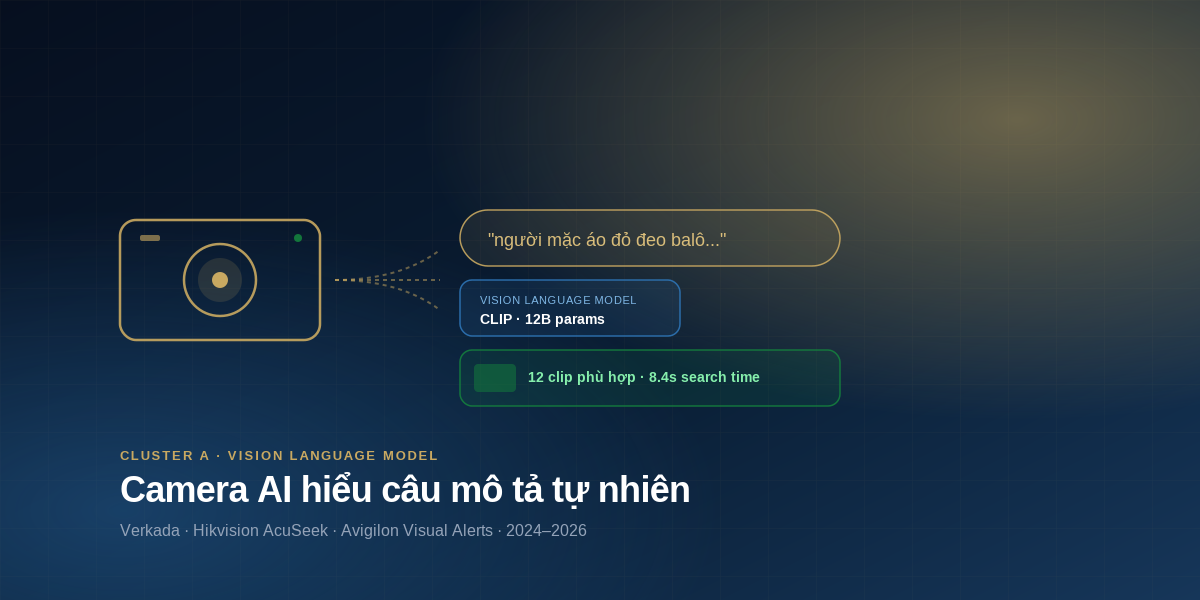
Bosch IVA Pro Context (expected 2026) is edge AI analytics running on Bosch CPP16 chip cameras, understanding complex behavioral context: "person in blue shirt taking a carton from shelf B" instead of just "person detected". Detailed metadata enables fast SAR response — finding a specific employee across 30 days of video takes only 5-10 minutes instead of 2-3 hours of manual review.
Bosch Video Management System integrates access control, logs all playback/export, auto-deletes per retention policy. Bosch VMS cost $8,000-20,000 for 100-200 cameras, including 3 years of support. Internal vendor reports show EU FDI using Bosch VMS reduces audit preparation time by 50-70% compared to open-source VMS.
[Bosch Security](/thuong-hieu/bosch-security/) ecosystem integrates cameras + access control + intrusion alarm — single pane of glass for compliance, reducing management effort by 30-40% compared to multi-vendor stacks.
GDPR camera workplace audit checklist for FDI in Vietnam
**Legal basis (Article 6)**
- Document legitimate interest: occupational safety, asset protection, fraud prevention
- Balancing test: business interests vs employee privacy rights
- Cameras must not monitor toilets, changing rooms, or private rest areas
**Biometric (Article 9)**
- Facial recognition only with explicit consent + opt-out alternative
- Time attendance face ID with RFID card backup
- Privacy impact assessment (PIA) for all biometric processing
**Notice & transparency**
- Clear signage at all camera entrances, font ≥24pt
- Detailed privacy policy: purpose, retention, access, contact DPO
- QR code linking to policy, local language + English
- Employee training on GDPR rights: access, rectification, erasure
**Retention & deletion**
- Retention policy 30-90 days depending on zone, clearly documented
- VMS auto-delete after retention period
- Archive only for specific incidents, reviewed every 6 months
**Access control & audit trail**
- VMS logs all playback, export, share — who, when, why
- Role-based access: security team, HR when needed, management approval for sensitive zones
- Audit trail retained ≥3 years for GDPR Article 30 record keeping
**Subject access request (SAR)**
- SAR response procedure ≤30 days
- Fast tool for locating specific individuals (Milestone Smart Search, Bosch IVA Context)
- Blur other people in frame when exporting video for SAR
**Security (Article 32)**
- Firmware signed, secure boot, encryption at rest/in transit
- Network segmentation: dedicated camera VLAN, no direct internet access
- Patch management: firmware updates every 3-6 months, test before deployment
Cost audit consultant $5,000-15,000 for a factory with 100-200 cameras, including gap analysis + remediation plan. Timeline 2-4 weeks from audit to complete report.
[EU AI Act 2026](/blog/eu-ai-act-2026-bionic-fdi-vietnam/) adds requirements for facial recognition: conformity assessment, risk management, human oversight — FDI needs to prepare for dual GDPR + AI Act compliance.