
Face ID student attendance is a system integrating AI facial recognition cameras, turnstile access control gates, and software that sends real-time notifications to parents. In Vietnam, this technology is being deployed in many schools from preschool to high school levels to automate the attendance process, prevent truancy, and enhance school gate security.
What is Face ID Student Attendance?

The Face ID student attendance system is a biometric solution that uses AI cameras to recognize students' faces when entering/leaving the school gate, automatically records the time, and sends notifications to parents via a mobile application, while also integrating with turnstile gates to control passage.
Unlike manual attendance using paper registers or magnetic cards, the Face ID system does not require students to stop or perform any additional actions. The AI camera placed at the school gate automatically detects, captures, and processes the face within 0.3-0.5 seconds. Attendance data is synced to the cloud, allowing the school and parents to monitor in real-time via an app or web portal.
Operating Principle of the Face ID Attendance System
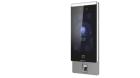


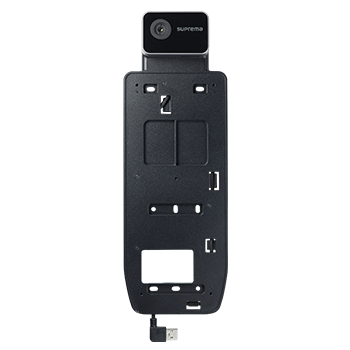

The operating process of the Face ID student attendance system consists of 4 main steps: face detection, feature extraction, identity matching, and notification sending. Each step is optimized to ensure processing speed under 1 second and accuracy over 99%.
Step 1: AI Camera Detects and Captures the Face
The AI camera installed at the school gate or entry/exit area uses 2MP-8MP resolution sensors, operating continuously 24/7. When a student enters the scanning zone, the face detection algorithm identifies the position and angle of the face, then captures an image at optimal quality. Modern cameras like Hikvision AcuSense or Dahua WizMind can filter light noise and recognize faces even when students wear masks or move quickly.
Step 2: Extract Facial Features Using AI
The facial image is transferred to an embedded processor (edge computing) or a central server. Here, a Convolutional Neural Network (CNN) model extracts biometric features such as the distance between the eyes, nose bridge shape, jawline contour, and cheekbone structure. This data is converted into a 128-512 dimensional feature vector, ensuring uniqueness for each student.
Step 3: Match Identity Against the Database
The extracted feature vector is compared against the pre-registered database of all students in the school. The matching algorithm uses methods like cosine similarity or Euclidean distance calculation. If the similarity meets the threshold (typically over 85-90%), the system confirms the identity and records the attendance time. If no matching result is found, the system captures and saves the image and sends an alert to security for manual checking.
Step 4: Integrate with Turnstile Gate and Send Notification
After successful authentication, a signal is sent to the turnstile gate (3-arm turnstile or wing barrier gate) to open the passage. Simultaneously, the system records the entry/exit time and sends a real-time notification to parents via app or SMS. Parents can receive information such as "Your child arrived at school at 7:15" or "Your child left school at 16:30". Attendance data is also synced to the school management software for teachers and administrators to monitor.
Summary Table of Technical Terms

| Term | Definition | Real-world Example |
|---|---|---|
| Face Detection | Detecting the location of a face within a frame | Camera detects a student's face in a crowded schoolyard |
| Feature Extraction | Extracting biometric features into a numerical vector | Converting a facial image into 256 representative numbers |
| Cosine Similarity | Method for measuring similarity between two vectors | Comparing the newly captured face vector with vectors in the database |
| Liveness Detection | Checking if the face is real or fake (photo/video) | Requiring the student to blink or slightly turn their head |