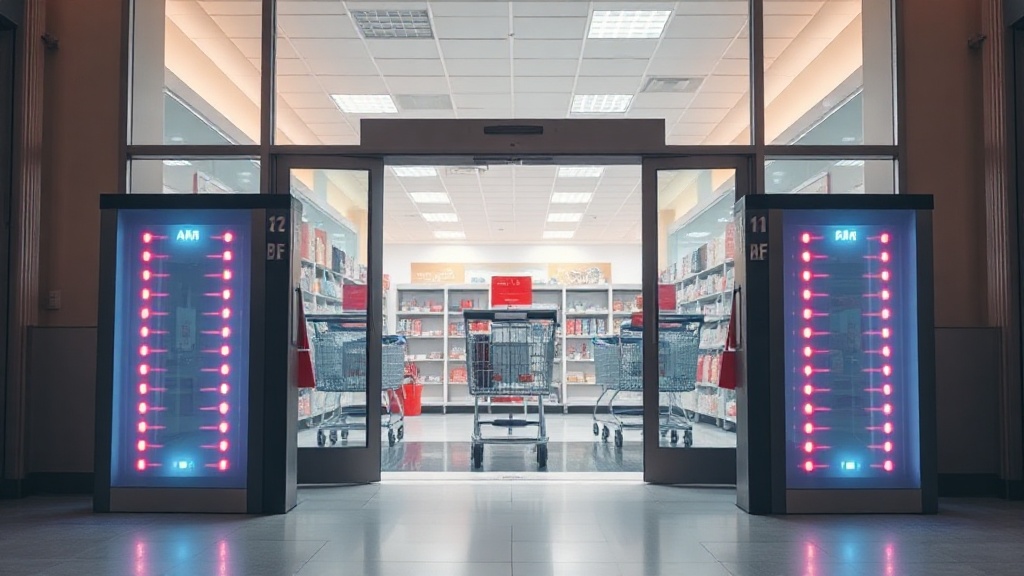
EAS (Electronic Article Surveillance) gates are a common anti-theft system in retail, operating by detecting tags/labels attached to merchandise that have not been deactivated at the checkout counter. The two main technologies dominating the market are RF (Radio Frequency) and AM (Acoustic Magnetic). This article compares RF vs AM EAS based on technical criteria, cost, suitability for each type of store (fashion boutique, mini supermarket, hypermarket) and 2026 trends.
1. What is an RF (Radio Frequency) gate? Who is it suitable for?
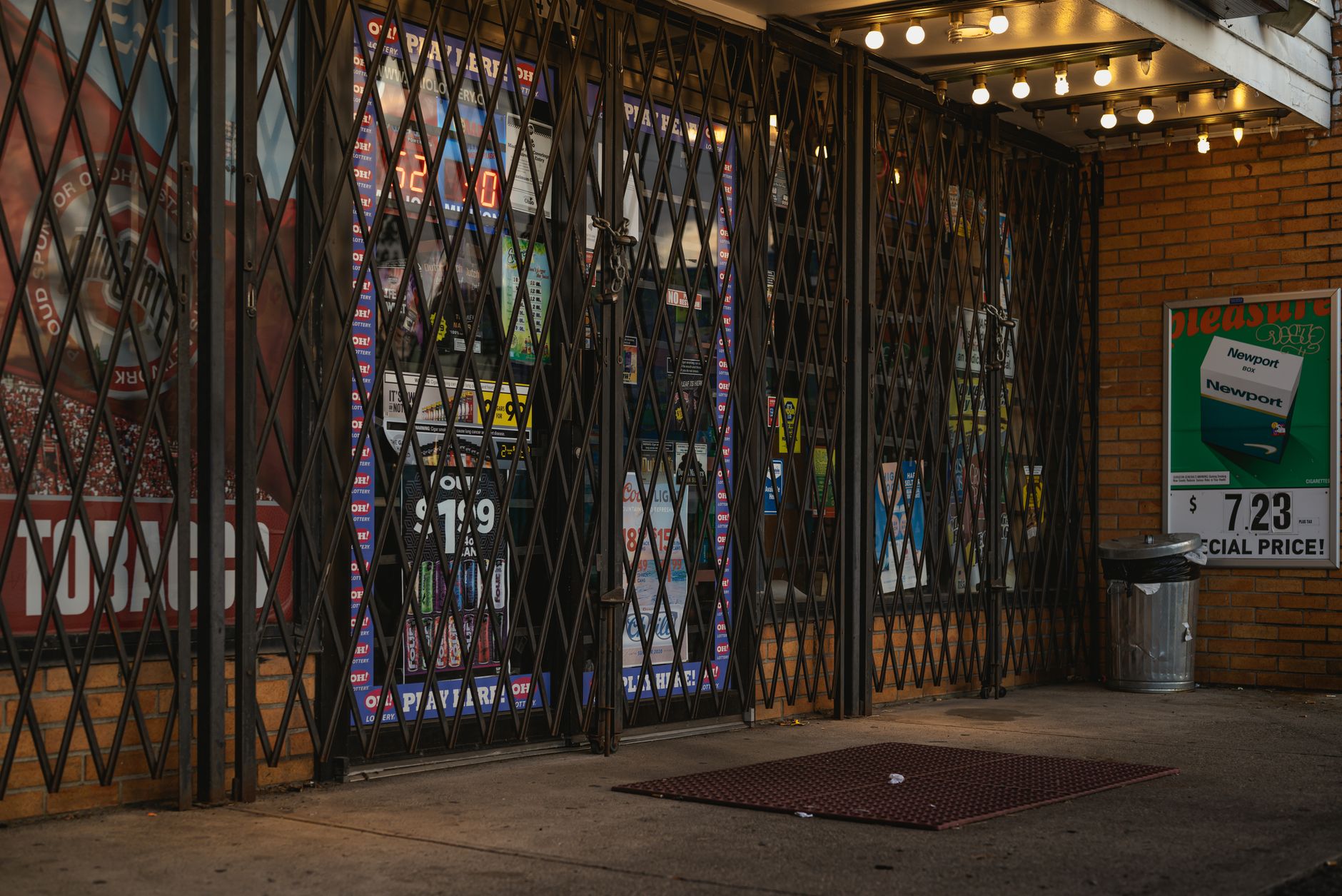
RF gates operate at a frequency of 8.2 MHz, using radio waves to detect passive tags (no battery). RF tags are typically soft tags (attached to clothing, handbags) or hard tags (attached to wine, cosmetics). Detection range is 0.9-1.5 meters per side of the gate.
RF technology emerged in the 1960s and became popular thanks to its low cost and diverse tag options. However, RF is susceptible to interference from metal and liquids. In 2026, RF remains the number one choice for fashion boutiques, clothing stores and cosmetics stores thanks to its low initial investment cost (15-25 million per gate pair) and inexpensive soft tags (300-800 VND/tag).
Best suited for: Small fashion stores, boutiques, cosmetics stores, small bookstores – where merchandise is mainly clothing, handbags, books (little metal).
2. What Is an AM (Acoustic Magnetic) Gate? Who Is It Suitable For?
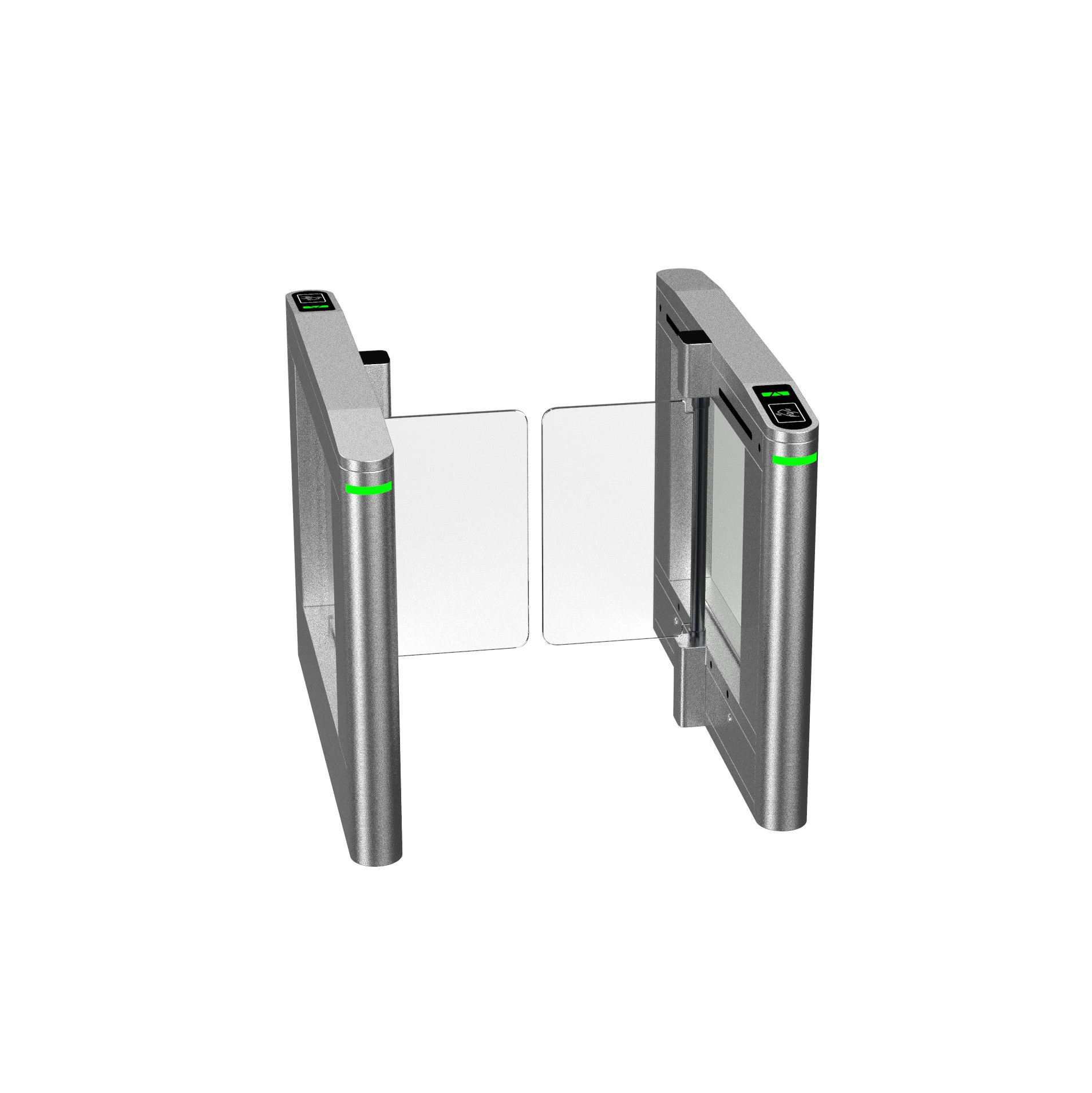
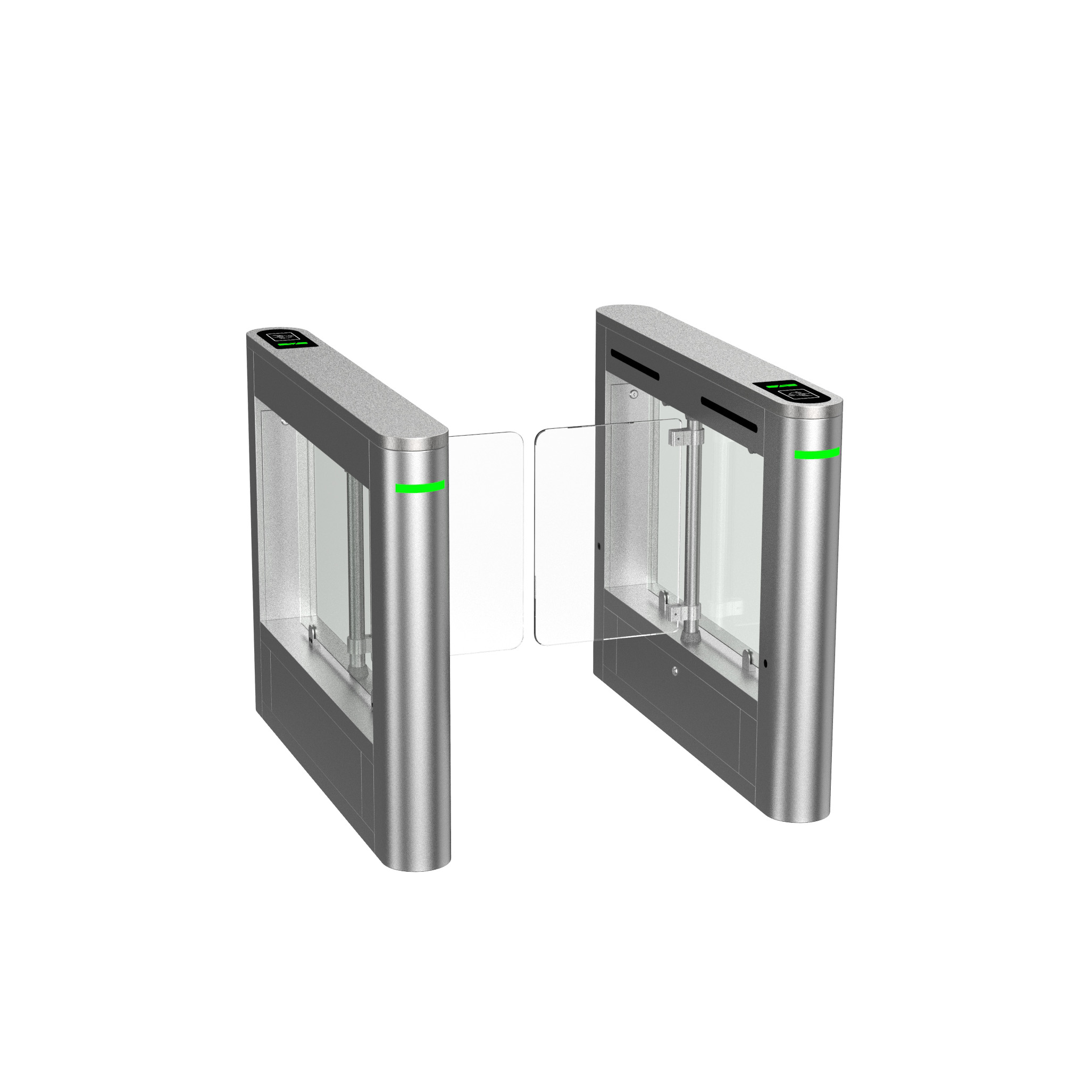

AM gates operate at a frequency of 58 kHz (lower than RF) and use the acoustic magnetic principle to detect tags with a ferrite core and magnetic conductors. AM offers superior interference resistance, a wider detection range (1.2-2.5 meters per side), and can detect tags through metal or liquid barriers.
AM is the more advanced technology, developed by Sensormatic (Johnson Controls) and Checkpoint. AM tags are typically hard tags that can be reused many times. The initial investment cost is higher (VND 30-60 million per gate pair), but accuracy and detection rates reach 95-99% in real-world conditions. AM is especially effective with goods that have metal packaging (canned food, beverages) and in environments with many electronic devices that cause interference.
Best suited for: Mini supermarkets, hypermarkets, convenience stores, pharmacies, electronics stores – where goods are diverse and include many metals and liquids.
3. Detailed RF vs AM EAS comparison: 2026 comparison table
Below is a comparison table of 6 key criteria between RF and AM, to help you make a decision based on your specific needs.
| Criterion | RF (8.2 MHz) | AM (58 kHz) |
|---|---|---|
| Operating frequency | 8.2 MHz | 58 kHz |
| Detection range per side | 0.9 - 1.5 meters | 1.2 - 2.5 meters |
| Interference resistance (metal, liquid) | Low (prone to interference) | Best (high interference resistance) |
| Actual detection rate | 70-85% | 95-99% |
| Investment cost (pedestal pair) | Best (15-25 million) | 30-60 million |
| Tag price (soft + hard) | 300 - 800 VND (soft tag) | 1,500 - 5,000 VND (hard tag) |
| Common tag types | Soft tag, simple hard tag | Hard tag, special tag (bottles, cosmetics) |
| Tag lifespan | Permanent (passive) | Permanent (reusable) |
| Brand compatibility | Checkpoint, Nedap, many smaller brands | Sensormatic, Checkpoint (AM line) |
| Maintenance | Low (few components) | Medium (requires periodic calibration) |
4. Choosing EAS pedestals by use case: 5 real-world scenarios
Each type of store has its own characteristics in terms of merchandise, customer traffic and budget. Below are recommendations for 5 common use cases in Vietnam.
Use case 1: Fashion boutique (area < 100m², apparel)
Recommendation: RF – Low investment cost, soft tags are easy to attach to clothing, no need for a wide detection range. Merchandise is mainly fabric, with little metal interference. One RF pedestal pair + 10,000 soft tags costs only about 20-30 million.
Use case 2: Mini supermarket (200-500m², groceries, food)
Recommendation: AM – Merchandise includes a lot of metal (canned goods, soda cans) and liquids (cooking oil, fish sauce). AM detects accurately even when the tag is inside a bag with a metal zipper. The high detection rate helps significantly reduce shrinkage.
Use case 3: Hypermarket (> 1000m², diverse merchandise)
Recommendation: AM – Wide detection range (2-3 meter pedestals can be used for large exits), good interference resistance against electronic devices. Integrates with the POS system and AI cameras to analyze customer behavior.
Use case 4: Electronics store (phones, laptops, accessories)
Recommendation: AM – Merchandise has metal casings, which easily cause RF interference. Hard AM tags can be firmly attached to products. However, they should be combined with locked display cabinets or alarm cables.
Use case 5: Pharmacy (medicines, dietary supplements, cosmetics)
Recommendation: AM – Medicines often have small packaging with multiple foil layers (metal). AM detects tags accurately even when concealed. Particularly effective for high-value products such as specialty medicines and imported cosmetics.
5. Pros and cons of RF and AM
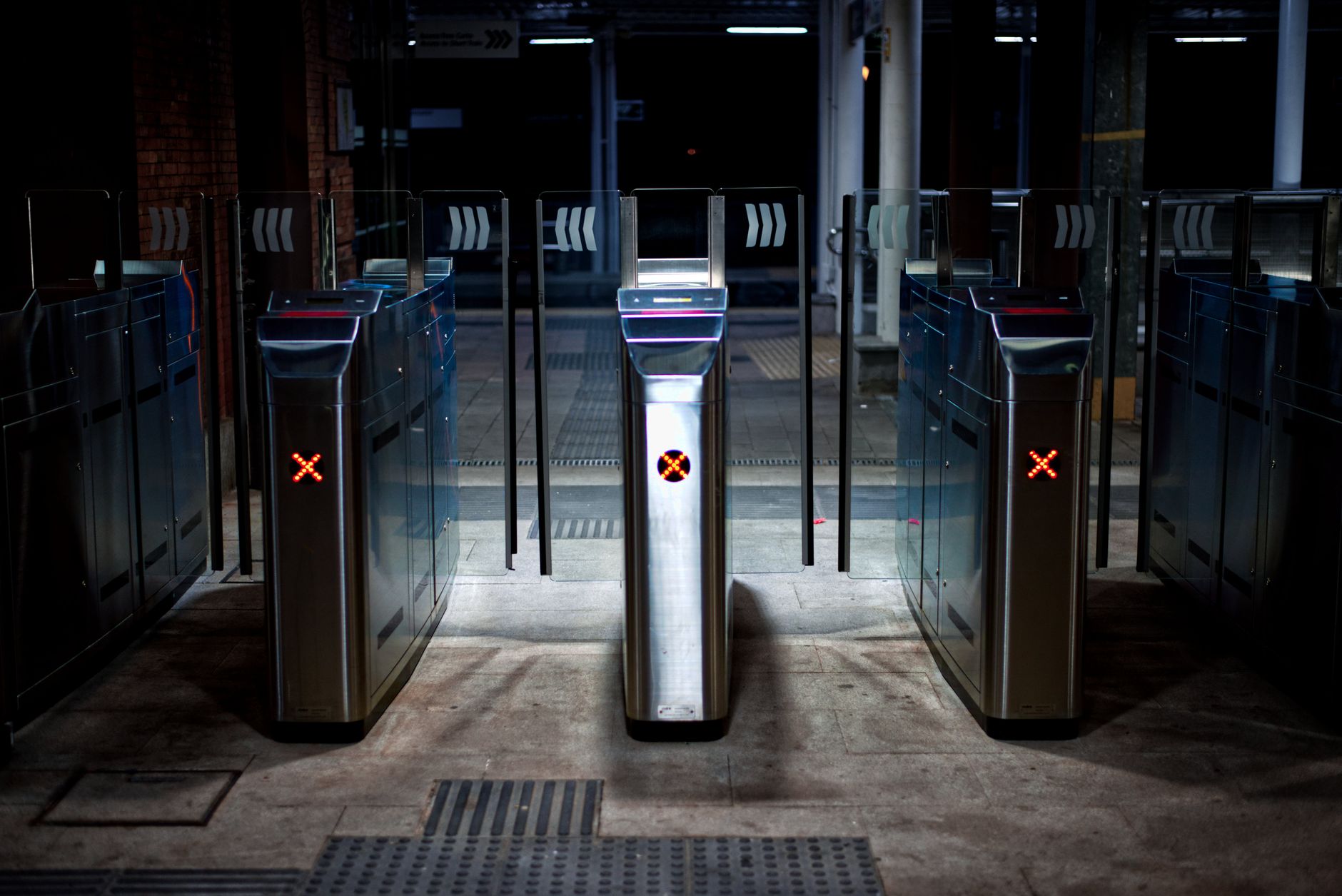
RF gates
Pros
- Lowest investment cost on the market
- Inexpensive soft tags, easy to apply on many surfaces
- Simple maintenance, few hardware faults
- Many competing brands
Cons
- Easily interfered with by metal and liquids
- Narrow detection range (gates need to be close together)
- Detection rate is not high (70-85%)
- Not suitable for environments with many electronic devices
AM gates
Pros
- Superior interference resistance
- Wide detection range (can protect large aisles)
- High detection rate (95-99%)
- Durable hard tags, reusable many times
Cons
- High initial investment cost
- Tags cost more than RF (1,500-5,000 VND each)
- Requires periodic calibration
- Fewer brands than RF
6. EAS trends 2026: AI and IoT integration
The EAS market in 2026 does not stop at RF and AM. New-generation systems integrate AI to analyze customer behavior and connect with AI cameras and warehouse management systems (WMS) to reduce shrinkage and optimize operations.
Major brands such as Sensormatic (Synergy) and Checkpoint are developing hybrid gates (AM + RFID) that enable both anti-theft protection and automatic inventory counting. In Vietnam, several large supermarket chains have tested AM gates combined with AI cameras to detect suspicious behavior in real time.
7. Expert advice: 3 steps to choosing the right gate
To choose the right RF or AM, you need to assess three factors: the type of goods, the store scale and the budget. Below is a simple 3-step process.
- Step 1 – Classify goods: If >70% of goods are clothing, bags, books (non-metal) → choose RF. If there are many canned foods, beverages, cosmetics, electronics → choose AM.
- Step 2 – Determine customer traffic and exits: Exits wider than 2 meters require AM to ensure detection range. Small stores (exit <1.5 meters) can use RF.
- Step 3 – Calculate ROI: With a budget under 30 million, RF is the safe choice. If annual shrinkage is >100 million, investing in AM (30-60 million) will pay back within 6-12 months thanks to the higher detection rate.
8. FAQ about RF and AM EAS
Can RF pedestals detect AM tags?
No. RF and AM use different frequencies (8.2 MHz vs 58 kHz) and are completely incompatible across technologies. You need to choose tags with the correct technology for the corresponding pedestals. Some hybrid pedestals (AM+RF) can read both, but the cost is higher.
Do AM pedestals consume more power than RF?
Yes, but not significantly. AM pedestals consume about 30-50W, RF about 15-30W. With 12 hours of operation per day, the difference is about VND 5,000-10,000 per month, which does not significantly affect operating costs.
Can AM soft tags be used for clothing?
Yes, but rarely. AM soft tags are usually more expensive than RF soft tags (about VND 1,000-2,000 each) and harder to find. Most AM tags are hard tags that can be removed with a magnetic tool. For clothing, RF soft tags remain the optimal choice in terms of cost.
Which pedestals are easier to maintain?
RF is easier to maintain because it has fewer components and does not require frequent calibration. AM requires periodic checks (every 6-12 months) to ensure sensitivity. However, both have a service life of 5-10 years if maintained properly.
Can RF and AM be combined in the same store?
Yes, but pedestals of the two technologies must be placed at least 2-3 meters apart to avoid interference. Some large supermarkets use AM at the main exit and RF at the secondary exit. However, tag management (RF for clothing, AM for food) will be more complex.
2026 trend: Should you switch from RF to AM?
If your store is using RF and the shrinkage rate remains high (>2% of revenue), or you are expanding into food/electronics categories, upgrading to AM is reasonable. Conversion costs include new pedestals and AM tags, but ROI is typically under 12 months thanks to reduced shrinkage.
Need advice on choosing EAS pedestals suitable for your store? Contact us now at 0796 700 777 or email [email protected] for a free survey and detailed quote.