
Shopping mall vehicle control software is a tool that digitizes the entry and exit process, from license plate recognition (LPR) to automatic fee calculation. This article compares two main options: free solutions (usually simple LPR apps, limited integration) and paid solutions (professional systems supporting barriers, real-time reports, POS integration). After reading, you will know which type suits your mall's scale and budget.
What is free shopping mall parking software? Who is it suitable for?

Free parking software is typically basic mobile or web applications that provide simple LPR functionality without requiring expensive hardware investment. It is suitable for small malls (under 50 spaces), mini-supermarkets, and showrooms with basic vehicle control needs and limited budgets.
This solution group often operates on a freemium model: free trial with a limited number of vehicles (e.g., 50-100 trips/day), or permanently free but lacking advanced features. Apps like the Free Permanent AI Vehicle Control Software from Việt Đức Trí Group fall into this category, allowing basic LPR entry/exit management, vehicle history viewing, and simple report generation.
What is paid shopping mall parking software? When should you invest?
Related Products



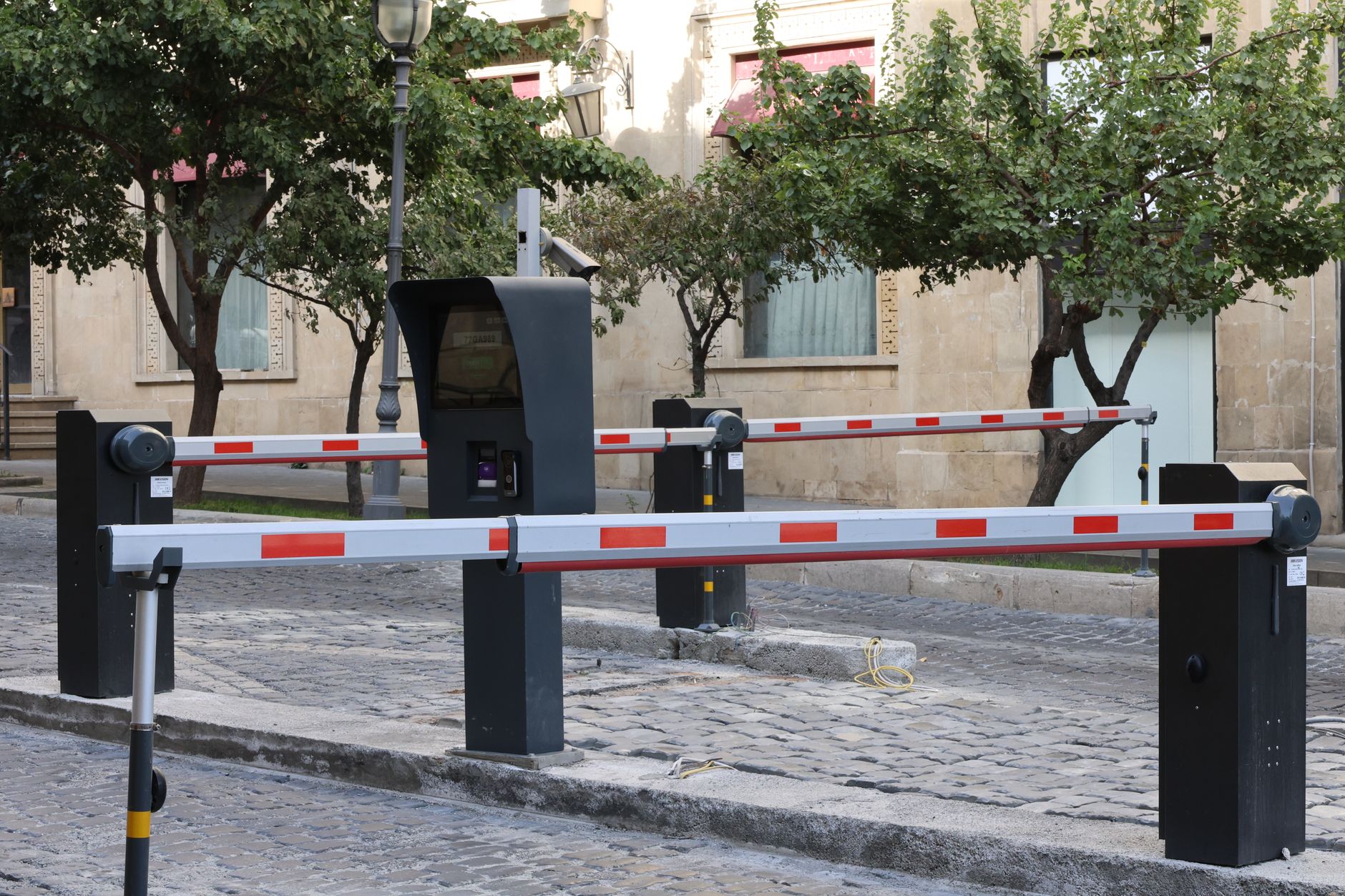
Paid parking software is a professional system integrating barriers, AI cameras, POS, automatic payment, and real-time reports. It is suitable for large malls (over 100 spaces), supermarket chains, and entertainment areas requiring strict control, loss prevention, and revenue optimization.
The initial investment cost for a paid solution ranges from 15-50 million VND for software + hardware (barriers, LPR cameras, card readers), plus an annual maintenance fee (5-15 million VND). In return, you get: POS integration for invoice synchronization, customer traffic analysis reports by hour/day, unknown vehicle alerts, 24/7 technical support, and scalability as the mall grows.
Detailed Comparison: Free vs Paid

The table below compares 5 core criteria: 3-year investment cost, LPR features, POS integration, real-time reports, and technical support. The paid solution excels in most criteria, but the free option is suitable for small-scale operations.
| Criteria | Free (basic LPR app) | Paid (professional system) | Notes |
|---|---|---|---|
| 3-year cost (estimated) | 0 - 5 million VND (if upgraded) | 50 - 150 million VND (hardware + license) | Free saves initial cost |
| License Plate Recognition (LPR) | 90-95% daytime, 80% night | 98-99% all conditions, supports dual plates | Paid is significantly more accurate |
| POS/Payment Integration | No or via manual API | Built-in integration with POS, e-wallets, POS machines | Best: Paid |
| Real-time Reports | History only, no real-time | Real-time dashboard, traffic and revenue analysis | Best: Paid |
| Technical Support | Community + email, slow | 24/7 hotline, on-site support within 4-8 hours | Paid ensures continuous operation |
Choose by Use Case: Which group does your mall belong to?

Based on scale and needs, below are suggestions for the most suitable solution for each typical mall profile.
Use Case 1: Mini-supermarket / Convenience store (under 30 spaces)
Recommendation: Free software (e.g., simple LPR app). Reason: Low vehicle traffic (30-50 cars/day), no need for complex reports. Hardware investment for barriers can be skipped; only a wall-mounted LPR camera is needed. Save 15-30 million VND/year compared to a paid solution.
Use Case 2: Medium mall (50-150 spaces, with food court and retail)
Recommendation: Mid-range paid solution (e.g., LPR system + barrier + management software). Reason: Needs POS integration for free parking for shoppers, real-time reports for staff coordination. An investment of 30-60 million VND helps reduce 1-2 parking staff, with payback in 12-18 months.
Use Case 3: Large mall / Supermarket chain (over 150 spaces, multiple floors)
Recommendation: High-end paid solution, integrating AI barriers, people-counting cameras, centralized management software. Reason: Multi-floor management, ticket loss prevention, customer behavior analysis. Cost 100-200 million VND but optimizes parking revenue (increase 15-25% through accurate collection) and reduces 2-3 staff.
Pros and Cons of Free Parking Software
Advantages
- Zero initial investment cost, no financial risk.
- Easy to use, quick deployment (install app, use existing camera).
- Suitable for testing before upgrading to a paid solution.
Disadvantages
- Lower LPR quality, especially at night or with faded plates.
- No POS, barrier, or automatic payment integration.
- Limited reports, no real-time, difficult data analysis.
- Slow technical support, no uptime guarantee.
Pros and Cons of Paid Parking Software
Advantages
- LPR accuracy 98-99%, stable operation in all conditions.
- Integration with POS, barriers, multi-channel payment (cash, card, QR).
- Real-time reports, traffic and revenue analysis, supports decision-making.
- 24/7 technical support, ensures continuous operation.
Disadvantages
- High initial investment cost (30-200 million VND depending on scale).
- Annual maintenance fee (5-15 million VND) for license and maintenance.
- Requires technical staff to manage the system.
Hidden Costs When Choosing Free Software for Malls

Many mall owners choose free options to save money, but hidden costs such as revenue loss, customer churn due to long waits, and increased staffing costs can outweigh the initial savings.
For example: A medium mall (100 spaces) using a free app with a 5% LPR error rate (about 15 cars/day). Each error leads to disputes, taking 3-5 minutes to resolve, equivalent to 45-75 minutes/day of wasted staff time. This adds 5-8 million VND/year in staffing costs. Not to mention frustrated customers who may not return due to long waits. Meanwhile, a paid solution costing 30-50 million VND completely eliminates this issue, with payback in 18-24 months through staff savings and increased parking revenue.
Case Study: La Me Mall Switches from Free to Paid, Saves 40 Million VND/Year
La Me Mall (District 7, Ho Chi Minh City) used a free LPR app for 6 months, then switched to a paid solution from Việt Đức Trí Group. Result: reduced 1 parking staff, increased parking revenue by 18%, saving 40 million VND/year.
Before the switch, La Me Mall experienced vehicles not being recognized during peak hours (5-7 PM), leading to 10-15 minute traffic jams. Customers complained, and the return rate dropped by 12%. After installing a barrier system + AI LPR camera integrated with POS, the barrier crossing time was reduced to just 3-5 seconds per vehicle. Real-time reports helped the mall owner coordinate staff flexibly. The investment cost was 45 million VND, with payback after 14 months. See more Case Study: ABC Supermarket Chain Cuts 100% Parking Staff with Free AI Barrier.