
VMS (Video Management System) and NVR (Network Video Recorder) are the two most popular surveillance camera management architectures today. This article compares VMS vs NVR based on cost, scalability, AI features, and system integration — helping Vietnamese SMEs choose the right digital security solution for offices, supermarkets, factories, or smart villas.
What is a Traditional NVR System? Who is it suitable for?

NVR (Network Video Recorder) is a dedicated hardware device that connects directly to IP cameras via a LAN network, automatically recording, managing storage, and playback. SMEs with 4-16 cameras, a budget of 15-45 million VND, and no complex integration requirements typically choose NVR.
Traditional NVR operates like a "black box" — plug in cameras, configure via a basic web interface, and the system runs automatically. Popular brands like Hikvision and Dahua offer NVRs with built-in motion detection and email alert features. For businesses that only need 24/7 recording and playback when incidents occur, NVR is the lowest-cost "plug-and-play" solution.
However, NVR has hard limits on channel count (typically 4-32 channels), maximum hard drive capacity (10-20TB), and the ability to upgrade AI features. When a business expands to 50+ cameras or needs integration with access control systems, NVR reveals limitations in bandwidth and video processing.
What is VMS (Video Management System)? When should you use it?
Related Products

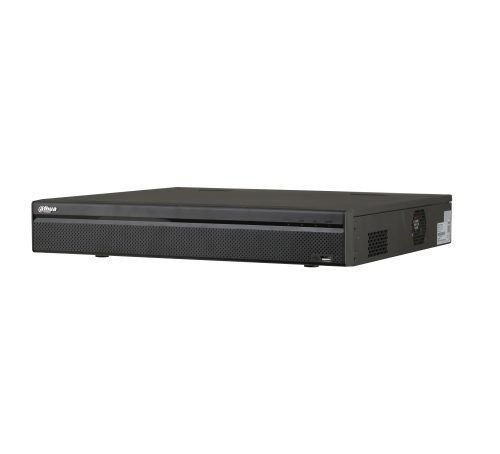
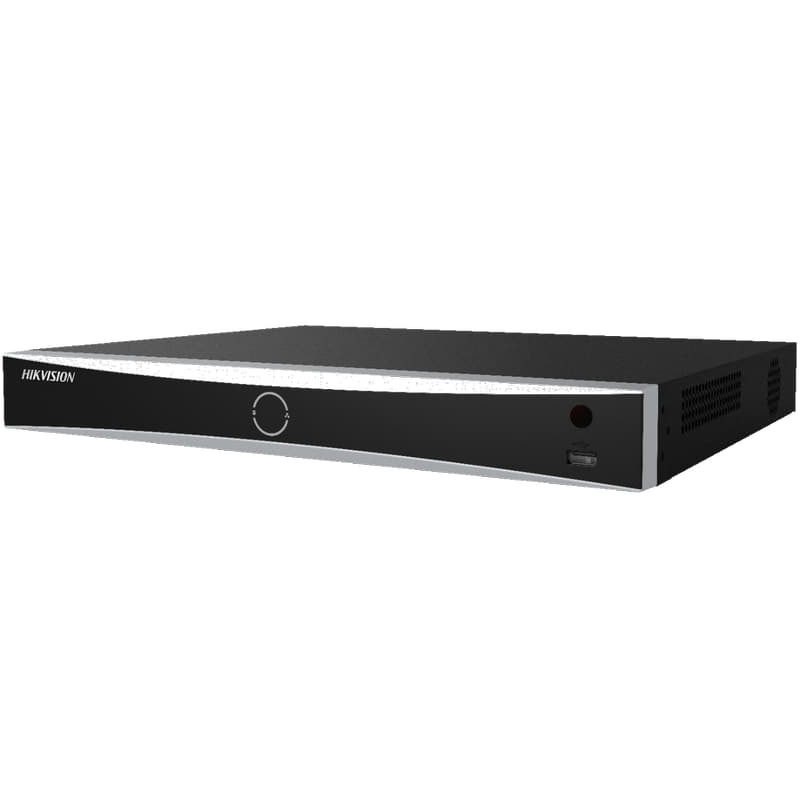

VMS is a video management software platform running on a server or cloud, enabling centralized management of hundreds of cameras from multiple brands (Milestone, Genetec, Hikvision, Dahua). Businesses with 20 or more cameras, requiring AI analytics, access control integration, and smart alarms should choose VMS.
Unlike NVR, VMS is not limited by physical hardware. A single VMS server can manage 50-500 cameras, store on NAS, SAN, or cloud, and easily scale by adding licenses. Platforms like Milestone XProtect or Genetec Security Center offer built-in integration with hundreds of third-party devices — from card readers and EAS gates to environmental sensors.
VMS initial investment is higher: software license 10-50 million VND for 16 channels, plus server and storage 30-150 million VND. However, for SMEs with plans to expand store chains or factories, VMS saves 30-40% in long-term costs by avoiding full system replacement during upgrades — consistent with analysis from VMS solutions for SMEs.
Detailed VMS vs NVR Comparison: 8-Criteria Comparison Table

The table below compares VMS and NVR based on 8 key criteria: cost, scalability, AI features, system integration, security, ease of use, multi-brand support, and reliability. Highlighted cells indicate the best choice for that criterion.
| Criteria | Traditional NVR | VMS (Video Management System) |
|---|---|---|
| Initial investment cost (16 channels) | Best — 15-30 million VND (includes NVR + HDD) | 30-80 million VND (license + server + storage) |
| Scalability | Hard limit 32-64 channels / 1 NVR | Best — 50-500+ channels / 1 server, expandable via licenses |
| AI features (video analytics) | Basic: motion detection, line crossing | Best — facial recognition, people counting, anomaly detection, heatmaps |
| Integration with access control & alarm systems | Limited — only with same-brand devices | Best — open SDK/API, integrates with turnstiles, barriers, EAS gates, sensors |
| Data security | Basic password, few encryption options | Best — AES-256 encryption, detailed user permissions, audit logs |
| Ease of use / installation | Best — plug-and-play, simple web interface | Requires technician for installation, 1-2 days training |
| Multi-brand camera support | Only same-brand cameras or basic ONVIF | Best — 50+ brands via drivers, ONVIF Profile G/T/S |
| Reliability / uptime | Best — dedicated hardware, 99.9% uptime | Depends on server OS, requires UPS + RAID |
Choose by Use Case: VMS or NVR for Your Business?

Based on scale, budget, and integration needs, each business will suit a different solution. Below are 4 common use cases with specific recommendations.
Use Case 1: Small Office (4-8 cameras, budget 10-20 million VND)
Recommendation: Traditional NVR — A 50-100m² office only needs basic recording and mobile playback. An 8-channel Hikvision DS-7608NI-K2/8P NVR at 5-7 million VND + 2 x 4MP cameras at 6-8 million VND + 2TB HDD at 2 million VND = total 13-17 million VND. Sufficient for 3-5 years without upgrades.
Use Case 2: Mini Supermarket Chain (3-5 stores, 60-100 cameras)
Recommendation: VMS (Milestone XProtect Professional) — Each store has 15-20 cameras, requiring centralized management from the main office. VMS allows viewing all cameras on a single dashboard, integrating AI people counting cameras and EAS gates for loss prevention. Cost 80-150 million VND for 64-channel license + server, saving 30% on monitoring staff compared to individual NVRs.
Use Case 3: Medium Manufacturing Plant (20-40 cameras, needs AI for safety)
Recommendation: VMS (Genetec Security Center or Milestone Corporate) — The plant needs to detect workers without helmets, intrusions into restricted areas, and integrate with AI cameras for workplace safety monitoring. VMS allows configuring complex AI rules and sending real-time alerts to the safety department. Investment 120-200 million VND but reduces workplace accidents by 70% and insurance costs.
Use Case 4: High-End Villa (8-12 cameras, smart home integration)
Recommendation: High-end NVR or entry-level VMS — If only recording and app viewing are needed, a Dahua 16-channel NVR at 25-35 million VND is sufficient. For integration with BMS systems or smart home (lights, blinds, alarms), choose an entry-level VMS like Milestone XProtect Essential (16-channel license 12-18 million VND) running on a PC server.
Pros and Cons of Traditional NVR

NVR has advantages in low cost and ease of use, but limitations in scalability and AI integration. Below is a detailed analysis of NVR pros and cons in the context of Vietnamese SMEs.
NVR Advantages
- Low cost: 15-45 million VND for a complete 16-channel system
- Simple installation: plug-and-play, no specialized technician required
- High stability: dedicated hardware, few software errors
- Low power consumption: 20-50W vs server 200-500W
- Hardware warranty for device lifetime (typically 2-3 years)
NVR Disadvantages
- Hard channel limit: difficult to expand beyond 32 channels
- Limited AI features: only basic motion detection
- Cannot integrate with third-party devices (access control, sensors)
- Maximum storage capacity 10-20TB, difficult to upgrade
- No reporting, audit log, or detailed permission features
Pros and Cons of VMS (Video Management System)

VMS excels in scalability and AI, but requires a larger investment and skilled technicians. The analysis below helps businesses weigh long-term benefits against initial costs.
VMS Advantages
- Flexible scalability: from 16 to 500+ channels with just additional licenses
- Powerful AI: facial recognition, people counting, anomaly detection
- Multi-system integration: access control, alarms, BMS, EAS gates via open API
- Centralized management: single dashboard for multiple locations
- High security: encryption, permissions, full audit logs
VMS Disadvantages
- High initial cost: 30-150 million VND for 16 channels
- Requires specialized IT knowledge for installation and maintenance
- Dependent on server OS: risk of downtime if not properly configured
- Annual maintenance fee: 15-20% of license value
- Higher power consumption: 200-500W for server + storage