
EAS (Electronic Article Surveillance) tags are an anti-theft system integrating field-emitting gates, tags, and a signal processor. In Vietnam, over 85% of retail supermarket chains, shopping malls, and convenience stores use this solution to reduce merchandise theft. Understanding the operating principle and correct installation is key to optimizing anti-theft performance and reducing unnecessary false alarms.
What is a Supermarket EAS Tag? Definition and Role

An EAS tag is a small device attached to merchandise, containing a magnetic coil or linear circuit sensitive to high-frequency magnetic fields (emitted from the gate). When merchandise that has not been deactivated passes through the gate, the EAS tag triggers an alarm. Its main purpose is to deter theft by detecting items that have not been processed at the checkout counter.
Structure of a Supermarket EAS Gate System
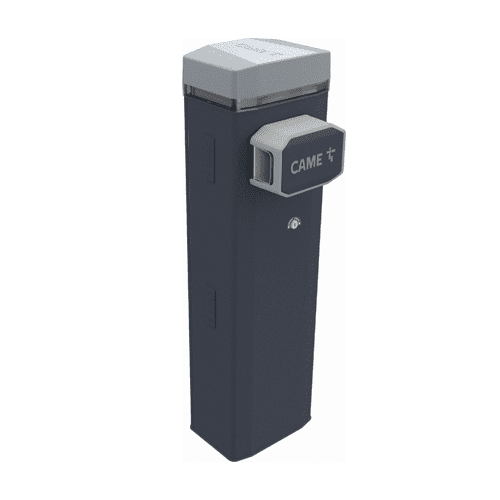



An EAS gate system consists of 4 main components: (1) a pair of transmitter-receiver pillars emitting a magnetic field at the store exit, (2) a signal processing control unit, (3) tags attached to merchandise, and (4) a deactivator (or manual deactivation) at the checkout counter. Each component works together to form a complete protective loop.
- Transmitter-Receiver Pillars (Gate/Antenna): Typically 1.8-2.1m high, placed at the exit. Emit a magnetic field at 58 kHz (AM) or 8.2 MHz (RF). The emission width is usually 0.8-1.2m to cover the entire walkway.
- Control Unit: Processes the signal from the antenna and decides whether to trigger an audible/visual alarm. Can be integrated with camera systems or VMS.
- EAS Tag: Sizes range from 3×5 cm to 1×2 cm depending on the type. Contains a magnetic coil (AM) or LC circuit (RF). No battery required, operates permanently.
- Deactivator: Located at the checkout counter. When a product is scanned, the tag is deactivated to disable the alarm when passing through the gate.
Operating Principle of EAS Tags: Three Basic Steps

EAS tags operate on the principle of magnetic induction: (1) the gate continuously emits a high-frequency magnetic field, (2) when an undeactivated tag passes through, it absorbs energy from the magnetic field and re-emits a signal, (3) the antenna receives this signal and sends it to the control unit; if the signal matches the identifier of an EAS tag, an alarm is triggered.
- Step 1 – Emitting the Magnetic Field: The gate continuously emits a high-frequency magnetic field (AM 58 kHz, RF 8.2 MHz, or EM 3.95 MHz). This field has a width of 0.8-1.2m and a depth of 0.5-1.5m depending on power.
- Step 2 – Induction and Response: The EAS tag (undeactivated) moves through the magnetic field; the coil inside the tag absorbs energy from the field and generates a response signal at its specific frequency.
- Step 3 – Detection and Alarm: The antenna receives the response signal and sends it to the control unit. If the frequency and identifier match, the control unit activates an alarm (85-95 dB sound, LED light, or log entry).
Three Popular EAS Tag Technologies: AM vs RF vs EM

The EAS tag market currently has three main technologies, each with its own advantages and disadvantages. Choosing the right technology will reduce false alarms, increase detection performance, and save operational costs for supermarkets.
| Technology |
|---|