
According to a 2025 report by the Vietnam Human Resources Association, time theft causes factories in industrial parks (IPs) an average loss of 4-7% of their payroll each year — equivalent to 2-5 billion VND for a factory with 1,000 workers. Face ID with 3D facial recognition technology and AI anti-spoofing is becoming the optimal solution to eliminate common forms of fraud in manufacturing factories and industrial parks.
What is time theft in factory IPs? The 4 most common forms

Time theft is the act of workers defrauding working hours, including buddy punching, card swiping for others, leaving early, and reporting false hours. According to a survey of 200 factories in Vietnam, 65% of businesses have recorded at least one form of time theft in the past year.
The four most common forms of time theft in factory IPs include:
- Buddy punching: Worker A swipes a card or clocks in for Worker B — accounting for 40% of total time theft cases according to internal statistics.
- Card swiping for others using RFID cards: Using a colleague's RFID card to clock in — common in factories using traditional card-based systems.
- Leaving early without reporting: Workers leave their workstations before the end of their shift but still report full hours.
- Reporting false hours: Unauthorized modification of check-in/check-out times on the system or asking others to confirm on their behalf.
Method 1: 3D Face ID prevents buddy punching with photos and videos


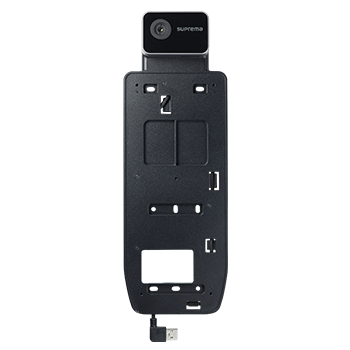

The 3D camera on Face ID devices scans 30-50 facial feature points, analyzing depth structure and skin liveness — causing static photos, pre-recorded videos, or silicone masks to be rejected immediately.
Modern Face ID devices like the Suprema FaceLite and ZKTeco ProFace X use multi-layer anti-spoofing technology: infrared sensors measure skin temperature, RGB cameras check surface texture, and a 3D module confirms facial contours. According to a trial at the Lá Me garment factory (Binh Duong), the buddy punching rate dropped from 12% to 0.3% after 3 months of switching from card-based systems to 3D Face ID. The initial investment cost for the Face ID system is recouped within 4-6 months thanks to payroll savings.
Method 2: Integrate Face ID with turnstiles — block physical card swiping for others

When Face ID is mounted directly on the factory turnstile, each worker must scan their face to pass through. RFID cards become useless because no one can "borrow" a colleague's face to enter the gate.
This solution combines 3-arm turnstiles or speed gates from Kapaisi with Face ID readers from Suprema or ZKTeco. When a worker's face scan fails (due to a mismatch), the turnstile locks down and sends a real-time alert to the shift manager. A case study at the Tân Phát electronics factory (VSIP IP) showed: after 6 months of deploying Face ID + turnstiles, card swiping incidents dropped by 95%, and check-in time decreased from 15-25 seconds to 3-5 seconds per person.
Method 3: Real-time alerts — instant detection of early leaving and false hours

The automatic IP time attendance software connected to Face ID records check-in/check-out times down to the second. If a worker leaves the production area before the end of their shift, the system automatically sends a notification to the manager via a mobile app.
The system from Việt Đức Trí Group integrates a real-time reporting module, allowing shift managers to track the check-in/check-out history of each worker in real-time. Data is synchronized with payroll software, completely eliminating the possibility of