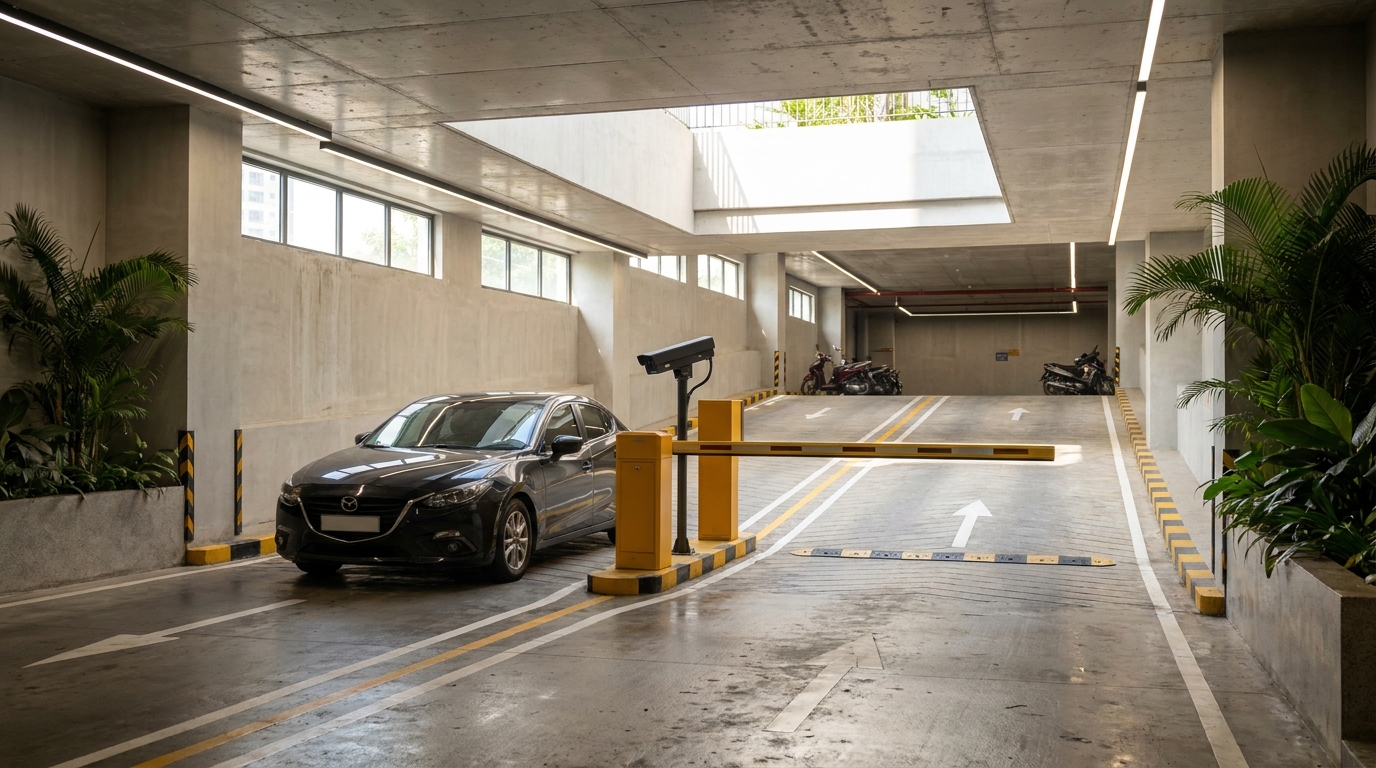
License Plate Recognition (LPR) camera is a solution integrating AI cameras and image processing software that automatically reads license plates to open barriers and record vehicle entry/exit times. In Vietnamese apartment buildings, this technology is gradually replacing the traditional magnetic card method to solve the problems of lost cards, vehicles passing through barriers without control, and lost parking revenue.
License plate recognition (LPR) camera uses AI to read license plates and automatically open barriers, replacing magnetic cards. The system records entry/exit times, prevents revenue loss and reduces 2-3 parking lot staff. Turnkey installation cost starts from 35-60 million VND for 1 vehicle lane, with a payback period of 12-18 months depending on the apartment scale.
What problems are apartment parking lots currently facing?

Apartment buildings in Hanoi and Ho Chi Minh City have 200-500 households, with motorcycles accounting for 70-80% and cars 15-25%. With the magnetic card model or manual ticket writing by staff, the management board (BQL) regularly faces 4 main groups of problems that cause revenue loss and security risks.
- ⚠ Parking ticket loss: Residents or security guards lose magnetic cards, vehicles exiting are not recorded, and the BQL cannot accurately reconcile revenue. It is estimated that each 300-household apartment building loses 15-30 million VND/month.
- ⚠ Uncontrolled vehicles: Intruders take advantage of the barrier opening for another vehicle to pass through, or use fake cards, leading to vehicle theft and liability disputes with residents.
- ⚠ Dependence on personnel: The BQL must assign 2-3 security guards/parking lot, with labor costs of 18-25 million VND/month, not to mention the risk of security guards colluding to accept vehicles without valid tickets.
- ⚠ Peak-hour congestion: From 7:00-8:30 in the morning and 17:30-19:00 in the evening, manual card swiping takes 10-20 seconds per vehicle, causing prolonged congestion at the entrance and exit gates.
How do license plate recognition cameras work in apartment building parking lots?
Related products




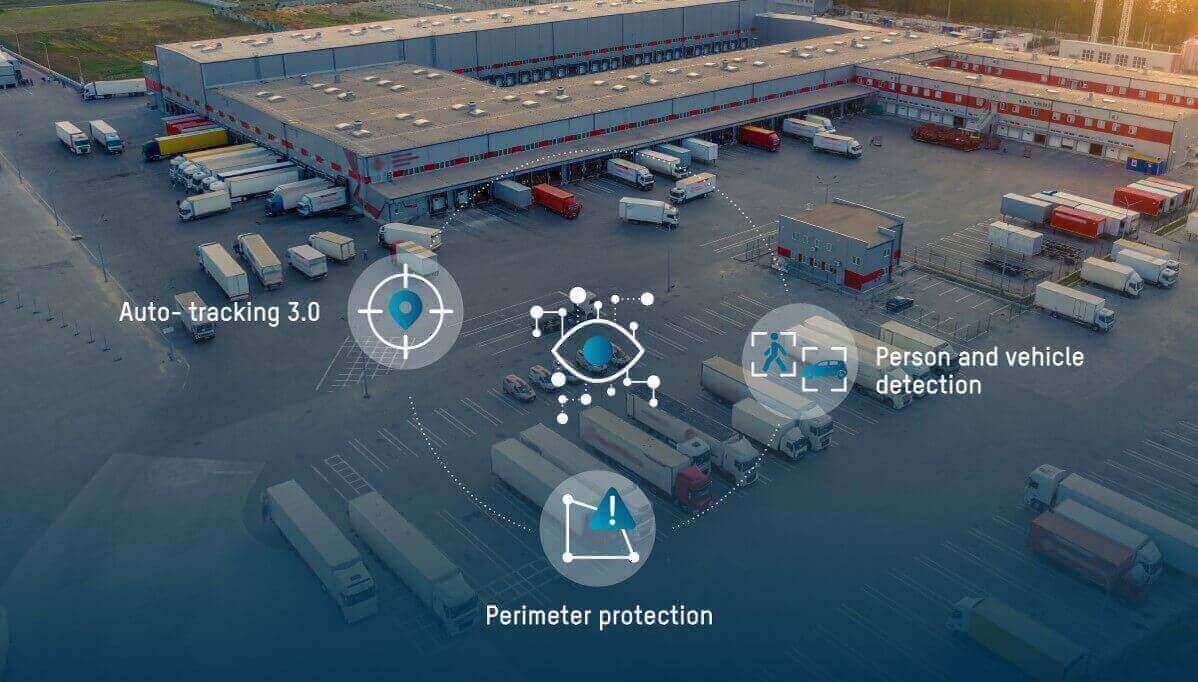
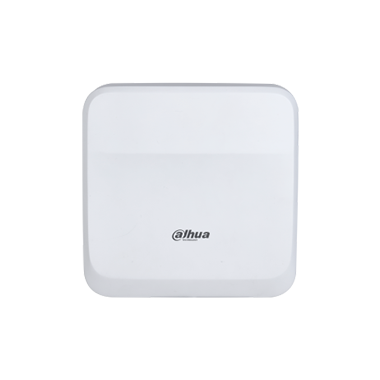
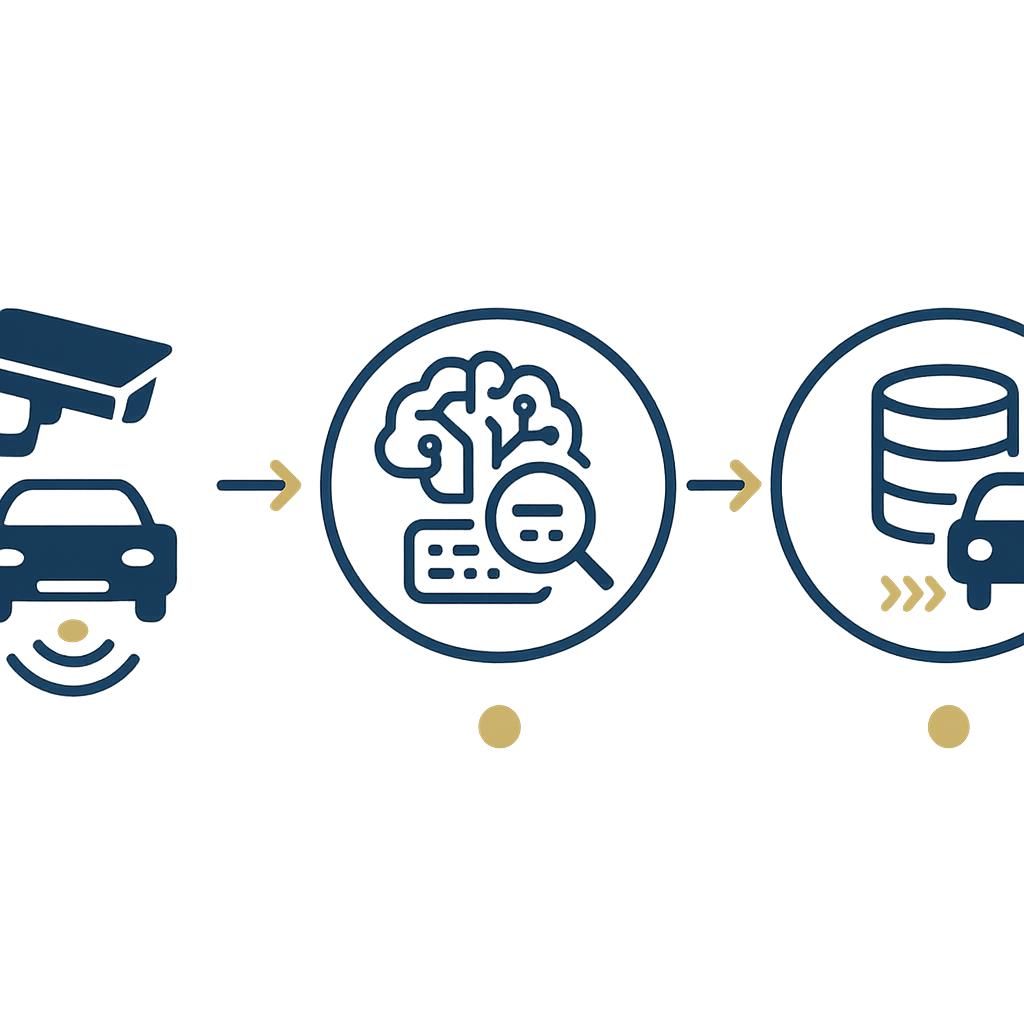
LPR cameras installed at each entry/exit lane record video continuously at 25-30 frames per second. When a vehicle enters the scan zone, the AI software extracts the license plate characters within 0.3-0.5 seconds, compares them with the resident vehicle registration list, and then automatically sends a signal to open the barrier. The entire process takes 1-2 seconds, with no need to stop the vehicle.
- Vehicle approaches the lane: A loop detector or radar detects the vehicle stopping at the capture position.
- LPR camera captures and processes: An infrared camera photographs the license plate, and the OCR algorithm recognizes the characters even at night or in the rain, with 95-99% accuracy.
- Software cross-checks the data: The system checks the license plate against the internal vehicle list (residents) or the visitor vehicle list (guests).
- Barrier opens automatically: If valid, the barrier lifts within 1-2 seconds. Vehicles not on the list are blocked, and security staff check them manually.
- Recording and storage: The system saves the license plate photo, entry/exit time, and driver image (if an auxiliary camera is available) to the database for reconciliation and lookup when needed.
Financial and operational benefits of switching to license plate recognition cameras
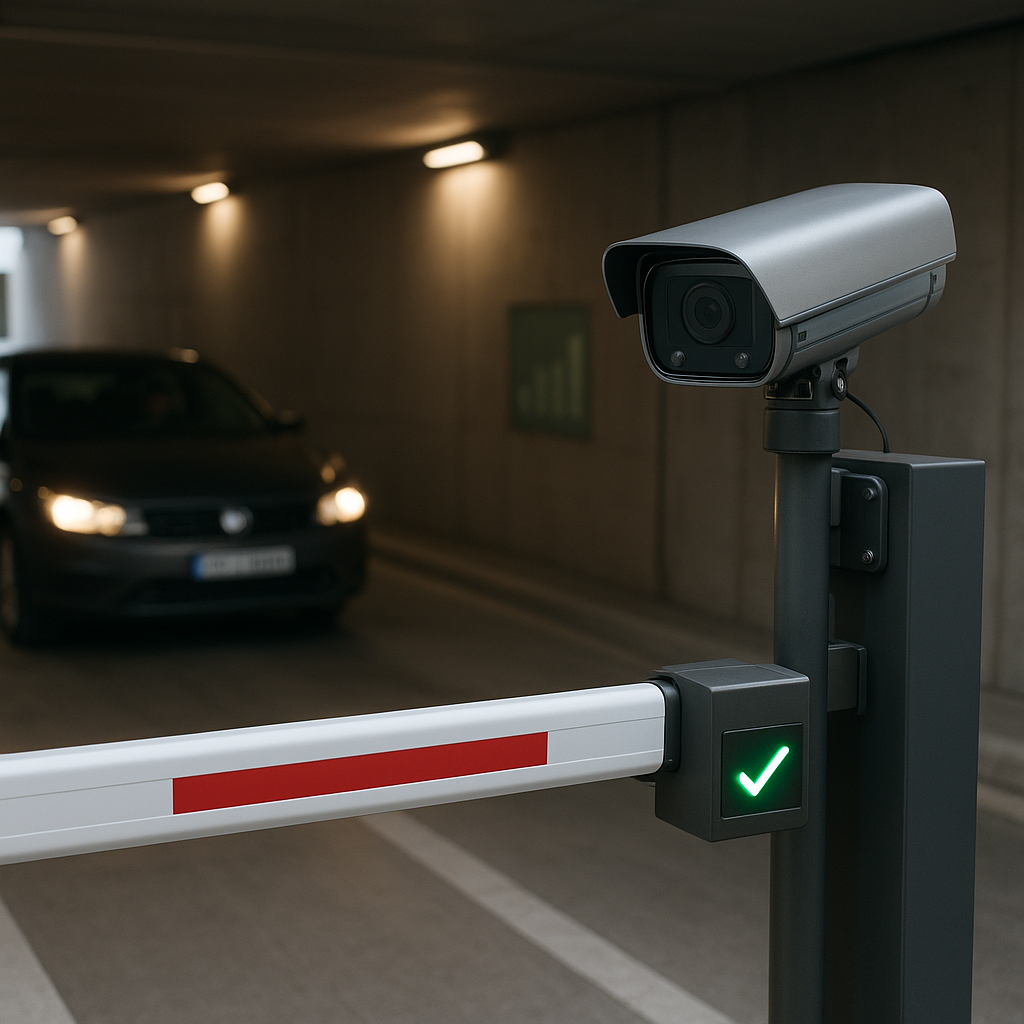
Unlike the RFID card method, the LPR system delivers benefits that can be measured with specific figures. Below are 5 groups of benefits that building management boards recorded after 6-12 months of deployment.
Increase revenue by 15-25%
Every vehicle entry and exit is recorded automatically, leaving no loophole for staff to skip parking tickets. Many apartment buildings found actual revenue to be 20% higher than in the old books.
Reduce 2-3 checkpoint staff
No security guard is needed to sit and write tickets; only 1 person is needed to monitor cameras in the control room to handle unfamiliar vehicles. This saves VND 12-18 million/month in labor costs.
Vehicles pass the barrier in 2 seconds
Waiting time drops from 10-20 seconds/vehicle to 1-2 seconds, thoroughly resolving morning and afternoon peak-hour congestion.
Absolute protection against vehicle theft
Unfamiliar vehicles not on the list cannot pass the barrier. Every exiting vehicle is cross-checked against its license plate, with no reliance on paper tickets or RFID cards that can be forged.
Transparent revenue reconciliation
The software exports revenue reports by day/week/month, the number of entries for each vehicle type, and statistics on irregular entries and exits — helping the management board and the investor maintain tight control.
Fast lookup when incidents occur
When there is a dispute or a vehicle is lost, the management board looks up the entry/exit history of each license plate in 3-5 seconds and can export captured images as evidence.
Cost comparison: RFID cards vs license plate recognition cameras
Many apartment building management boards are concerned about the initial investment cost of an LPR system. However, when total cost of ownership (CAPEX + OPEX) over 3-5 years is calculated, the AI solution is usually significantly cheaper than maintaining an RFID card model with on-site staff.
| Criterion | Traditional RFID cards | LPR cameras + AI software |
|---|---|---|
| Initial investment cost (1 vehicle lane) | VND 25-40 million (reader, barrier, cards) | VND 35-60 million (LPR camera, barrier, software) |
| Labor cost/month | VND 18-25 million (2-3 security guards) | VND 6-10 million (1 monitoring staff member) |
| Cost of lost/damaged RFID cards | VND 5-10 million/month (card replacement at VND 10-20k/card) | VND 0 (no cards used) |
| Lost revenue | VND 15-30 million/month (difficult to reconcile) | Nearly zero (recorded automatically) |
| Payback period | Undetermined | 12-18 months |
Application for existing apartment buildings (in operation) and newly handed-over apartment buildings
Depending on the state of the infrastructure, the LPR solution is deployed differently. Existing apartment buildings usually prioritize non-demolition solutions, while new apartment buildings integrate it right from the design stage.
Existing apartment buildings — Overlay on existing infrastructure
For apartment buildings that have been operating for 5-10 years, the management board only needs to install LPR cameras at the existing barrier positions, connected via LAN or WiFi. An Ninh Số's AI parking lot management software is compatible with existing barriers from brands such as Kapaisi, ZKTeco, and Hikvision — no need to replace all the hardware. Installation time is 1-2 days per vehicle lane, carried out at night so as not to affect residents. See also the 4-step roadmap for upgrading AI vehicle control software for existing apartment buildings.
New apartment buildings — Integrated right from the design stage
For projects under construction or about to be handed over, the investor should prepare the infrastructure in advance: network conduit from the entry/exit gate to the control room, a 24V power supply for cameras and barriers, camera mounting positions 3-5m from the barrier, and a shooting angle of 30-45 degrees relative to the road surface. The additional cost of integrating it in advance is only 60-70% of installing it after completion.
Case study: 450-unit apartment building in Ho Chi Minh City saves VND 180 million/year after switching to LPR
In early 2025, a 450-unit apartment building in District 7 (Ho Chi Minh City) switched from a card-based model to a license plate recognition camera system. After 12 months, operating results showed efficiency exceeding expectations.
Before deployment, this apartment building assigned 4 security guards/parking lot at a cost of VND 22 million/month, while also recording 15-20 lost cards/month and estimated motorcycle revenue leakage of 8-10%. After installing 2 motorcycle lanes + 1 car lane with total investment of VND 95 million, the management board reduced staffing to 1 monitoring employee, and revenue increased 18% thanks to accurate reconciliation. Total savings and revenue increase reached VND 180 million/year, with a payback period of only 7 months. To better understand the financial model, see the case study of a Hanoi office building saving VND 150 million/year by migrating to an AI parking lot.
Which LPR camera to choose for an apartment parking lot?
Not every ordinary IP camera can read license plates in low-light conditions or when vehicles are moving fast. Dedicated LPR cameras have an AI chip that processes images right on the device, without needing a powerful central server.
For apartment parking lots, you should choose an LPR camera with the following criteria: minimum resolution of 2MP (4MP recommended), built-in infrared illuminator for night capture, aperture F1.6 or lower, backlight glare resistance (WDR 120dB), IP67 water resistance rating. LPR camera lines from Hikvision (DS-2CD7A26G0/P-IZHS) and Dahua (ITC237-PW6M-IRLZF105) all meet these well. On the software side, An Ninh Số's AI vehicle control solution is included free forever when purchasing barrier/camera hardware — no recurring license fees, running cross-platform on Web + iOS + Android. Compare the cost between the old software and the free AI solution in the article comparing the cost of old parking lot software and free AI 2026.
Frequently asked questions about apartment license plate recognition cameras
Below are the questions apartment management boards commonly raise before deciding to invest in a license plate recognition system.
Do license plate recognition cameras work well at night or in the rain?
Can motorcycles and cars share the same LPR camera?
How does the system handle it when a license plate is dirty, blurry, or obscured?
How much does it cost to install license plate recognition cameras for a 300-unit apartment building?
Does An Ninh Số's AI parking lot management software integrate with Hikvision/Dahua cameras?
How long does it take to install an LPR system for an operating apartment building?
Need advice on installing license plate recognition cameras for your apartment building? Contact An Ninh Số via hotline 0796 700 777 or email [email protected] to get a site survey and a turnkey quote within 24 hours. Deployment support available in Hanoi, Ho Chi Minh City and 63 provinces and cities.