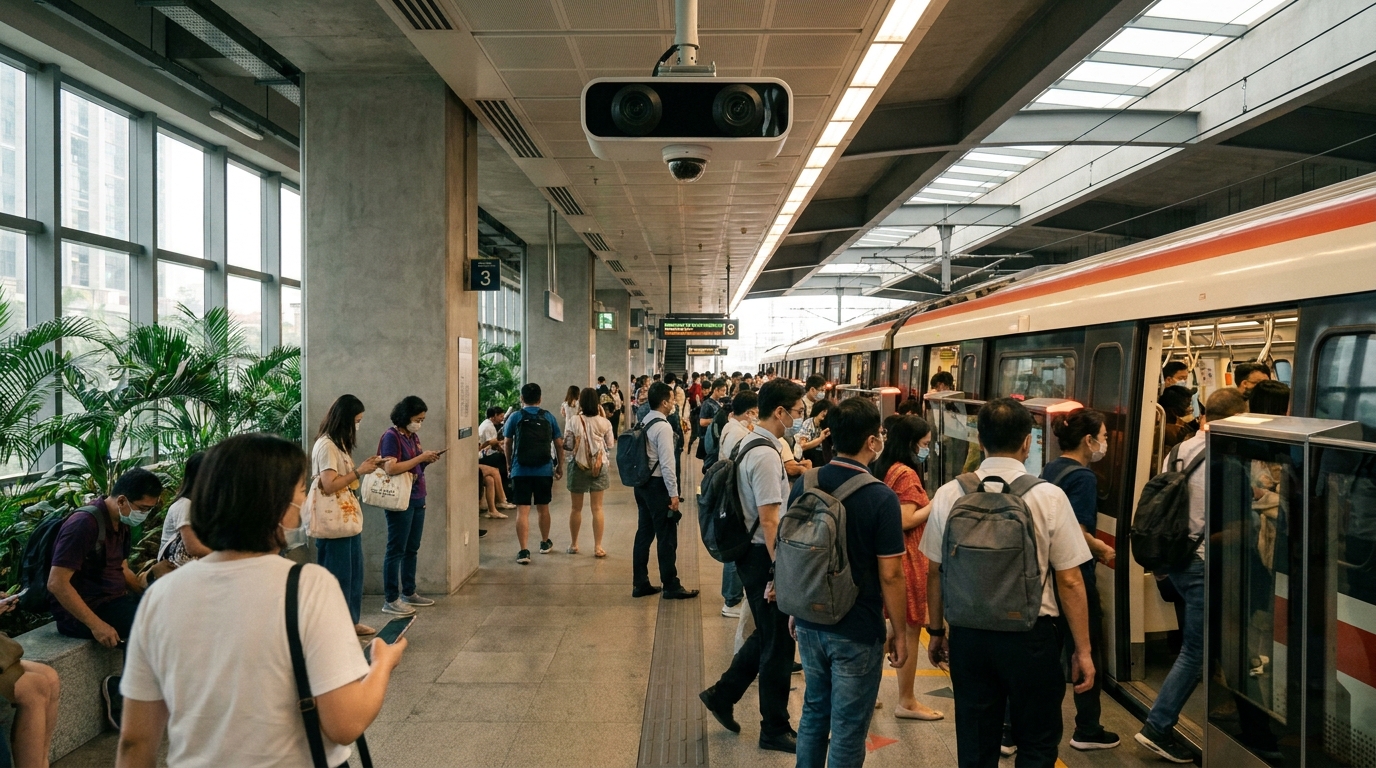
The AI camera people counting system for subways is a solution that integrates computer vision into metro station infrastructure, automatically measuring occupancy on platforms and train cars in real time. On one Asian metro line, this technology helped reduce peak-hour overcrowding incidents by 30% and increased passenger satisfaction by 15% after just 6 months of operation.
Industry: Public Transportation / Passenger Transport
Scale: 12 stations, 15 km of railway, 200,000-250,000 passengers/day
Location: Coastal city, population 3-4 million
Solution: 3D stereo vision people counting camera system + Real-time occupancy management dashboard
Customer Challenges
- Uncontrolled peak-hour overcrowding: Platforms frequently exceeded 120-150% of design capacity during 7-9 AM and 5-7 PM slots, causing severe congestion.
- 15-20 incidents/month related to overcrowding: Including train delays due to doors not closing, passengers fainting from crowding, and arguments among commuters.
- No real-time occupancy data: Station staff relied solely on manual observation and personal experience to decide on blocking entrances or requesting additional trains, leading to 5-10 minute delayed responses.
- 12% increase in operational costs due to overtime: Security and dispatch teams had to work continuous overtime to handle overcrowding incidents, inflating the payroll budget.
Solution Deployed by Việt Đức Trí Group
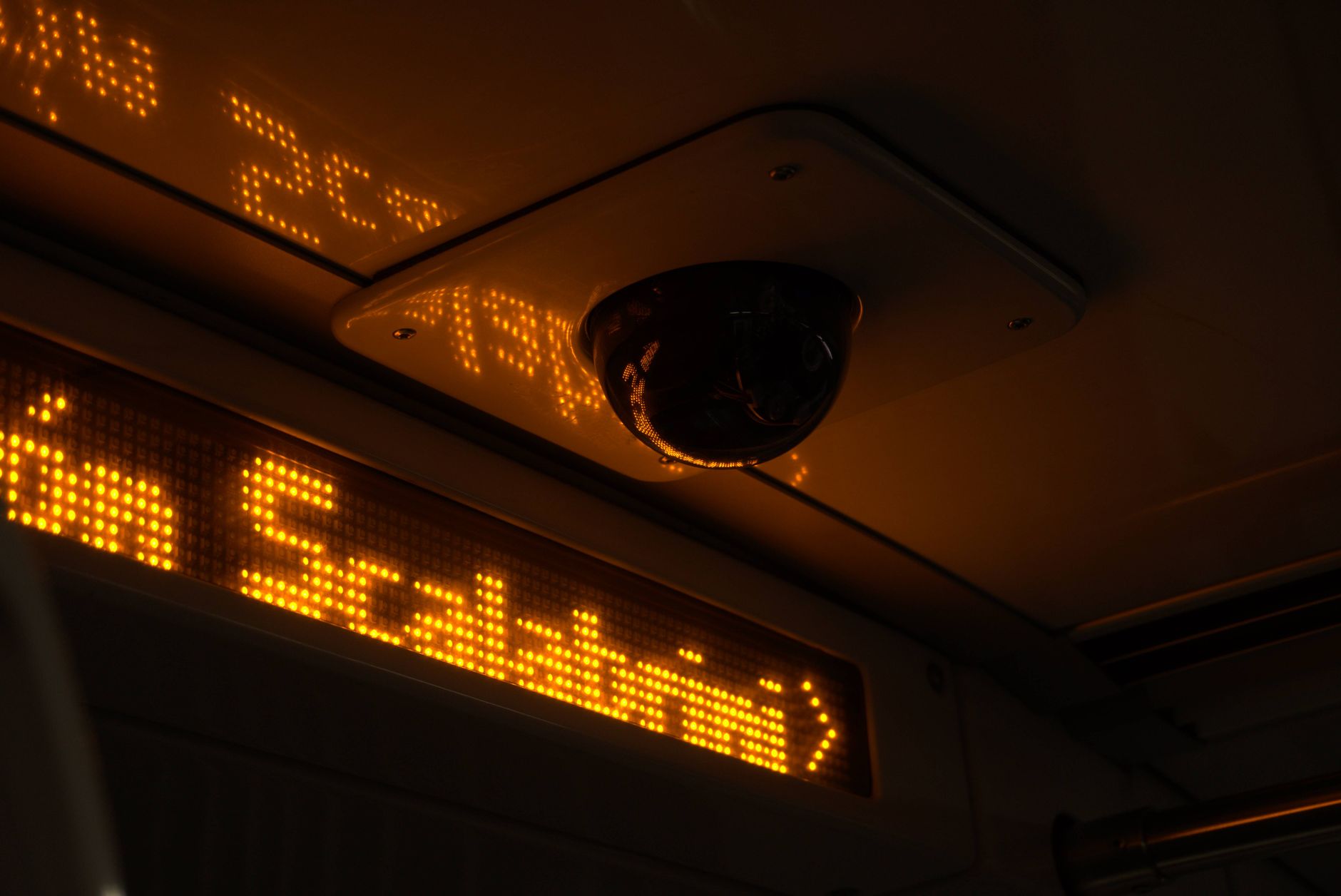
Việt Đức Trí Group proposed a 3D stereo vision people counting camera system installed at 12 stations, combined with a real-time occupancy management dashboard and automatic alerts. The deployment process consisted of 5 main steps over 8 weeks.
- Survey of current conditions at 12 stations: Measured actual traffic flow, identified 24 strategic camera installation points (2 cameras/station) in platform and fare gate areas.
- Installation of 3D stereo vision cameras: Used Xovis PC3 cameras with 99% accuracy under metro station lighting conditions, resistant to vibration and interference from trains.
- Integration with existing SCADA system: Connected real-time occupancy data to the Operations Control Center (OCC) via API protocol, enabling display on large screens.
- Development of a 3-level alert dashboard: Alerts triggered when occupancy reached 70% (yellow alert), 85% (orange alert), and 95% (red alert - requiring immediate intervention).
- Operations and maintenance training: 3 days of training for 30 dispatch and technical staff, including emergency response procedure manuals.
Achieved Results

- 30% reduction in overcrowding incidents: From 18 incidents/month down to 12-13 incidents/month after 6 months of operation.
- 15% increase in passenger satisfaction: Periodic surveys showed satisfaction scores for crowding levels rose from 3.2/5 to 3.7/5.
- 25% reduction in response time: From 5-8 minutes down to 1-2 minutes when an overcrowding alert was triggered, thanks to real-time data.
- ROI under 18 months: Savings of 240 million VND/month from reduced overtime and incident handling costs, against a total investment of 3.8 billion VND.
"Before, every Monday morning was a nightmare for the dispatch team because we didn't know which station was overcrowded. Now, the dashboard displays real-time occupancy, and we can dispatch additional trains in just 2 minutes. The system has changed how we operate the metro."
— Mr. Trần Văn Minh, Operations Director, City X Metro
Lessons for Vietnamese Metro Lines
From this case study, operating and upcoming metro lines in Vietnam, such as the Bến Thành - Suối Tiên Metro (HCMC) or the Nhổn - Hanoi Station Metro, can draw 4 important lessons to optimize operations from the start.
- Integrate people counting systems from the station design phase: Installation costs will be 30-40% lower compared to retrofitting after the station is operational. Camera locations and network infrastructure should be pre-planned.
- Combine multiple data sources for higher accuracy: 3D stereo vision cameras should be supplemented with data from turnstiles and train weight sensors for a comprehensive occupancy picture.
- Build flexible operational scenarios based on data: Instead of running fixed schedules, metros can adjust train frequency based on real-time occupancy, especially during holidays or special events.
- Invest in operational training and a data-driven culture: Technology is only effective when the operations team trusts and uses data for decision-making. It takes 3-6 months to transition from experience-based to data-driven operations.
Comparison: AI People Counting Camera vs. Infrared Sensors for Metro
During the solution survey, the technical team evaluated two main technologies: AI people counting cameras and infrared sensors. The comparison table below explains the reason for choosing AI cameras.
| Criteria | AI 3D Stereo Vision Camera | Infrared Sensor |
|---|---|---|
| People counting accuracy | 95-99% | 70-85% (prone to interference in crowds) |
| Distinguishes adults/children/luggage | Yes (3D shape analysis) | No (counts thermal signals only) |
| Operation in vibrating environments | Good (anti-vibration mode) | Average (prone to errors with vibration) |
| Initial investment cost | 40-60% higher | Lower |
| Dashboard integration capability | Built-in open API | Requires intermediate gateway |
Frequently Asked Questions
Does the subway people counting system work accurately during crowded peak hours?
Yes. The 3D stereo vision camera uses two lenses to create a depth map, allowing it to distinguish individuals even when they are standing close together. In this case study, accuracy remained at 95-97% even when density reached 4-5 people/m² on the platform. The system can also filter out interference from luggage, strollers, and non-human objects.
What is the cost of deploying a people counting system for a 10-station metro line?
The total investment cost for a people counting system at 10 stations (20 cameras + dashboard + SCADA integration) ranges from 3-5 billion VND, depending on the existing network infrastructure and integration requirements. Annual maintenance costs are approximately 8-12% of the initial investment.
Start with a free 60-minute site survey
Our senior technical team will visit your site, assess the current setup, and propose a bundle matched to your business model and budget.