
Face ID, fingerprint, and RFID cards are the three most popular time attendance technologies in Vietnamese offices in 2026. This article provides a detailed comparison of each solution based on cost, accuracy, fraud resistance, and suitability for different business types — helping you choose the right one from the start.
What is Face ID? Who is it suitable for?

Face ID (AI facial recognition) uses 3D or AI cameras to recognize employee faces, enabling contactless time attendance in 0.3-0.5 seconds. Suitable for businesses prioritizing security, offices with over 200 employees, or environments requiring absolute fraud prevention.
Face ID time attendance devices like Suprema FaceLite or ZKTeco SpeedFace-V5L feature 3D anti-spoofing capabilities, recognizing employees even when they wear masks or glasses. The initial investment cost is higher (8-25 million VND/device), but it completely eliminates "buddy punching" — a common issue with fingerprint and RFID card systems.
For offices with shifts or remote work, Face ID integrates with mobile apps, allowing employees to clock in via smartphone. This solution is also optimal for businesses looking to integrate with KSRV Face ID systems to synchronize access control and time attendance on a single platform.
What is fingerprint? Who is it suitable for?
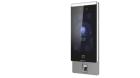
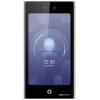


Fingerprint time attendance uses optical or semiconductor sensors to scan employee fingerprints, with a recognition time of 1-2 seconds. Suitable for small and medium businesses (under 100 employees), limited budgets (3-8 million VND/device), or dry, low-dust environments.
Fingerprint time attendance devices like ZKTeco K40 Pro or Suprema BioEntry W2 have the lowest cost among the three technologies. However, accuracy drops significantly with wet hands, sweat, or worn fingerprints (false rejection rate of 5-10%). Manual laborers or outdoor workers often face difficulties clocking in.
The biggest drawback of fingerprint is its vulnerability to "buddy punching" — employees can copy colleagues' fingerprints using silicone gel or high-resolution printed images. Businesses lose an average of 8-12 minutes/day/employee due to waiting in line during peak hours.
What is an RFID card? Who is it suitable for?

RFID cards (Proximity) use plastic cards with embedded RFID chips; employees swipe them past a reader to clock in. Suitable for temporary offices, environments with many rotating users (under 500 employees), or where the cheapest solution is needed (2-5 million VND/device).
RFID cards have the advantage of low cost and easy replacement if lost (5-15 thousand VND/card). However, they have the highest fraud rate: employees can ask colleagues to "swipe for them," lost cards require reissuing, and they cannot verify actual identity. Studies show businesses using RFID cards lose 3-5% of their payroll due to time attendance fraud.
RFID cards are best suited for environments with seasonal employees, frequent visitor traffic, or newly established offices without a budget for high technology. However, the 2026 trend shows businesses are gradually shifting to Face ID to optimize operations.
Detailed comparison: Face ID vs fingerprint vs RFID card

The comparison table below evaluates the 3 time attendance technologies based on 7 core criteria: accuracy, speed, fraud resistance, investment cost, operating cost, maintenance, and scale suitability.
| Criteria | Face ID | Fingerprint | RFID Card |
|---|---|---|---|
| Accuracy | < Ready to deploy in 7–14 days Start with a free 60-minute site surveyOur senior technical team will visit your site, assess the current setup, and propose a bundle matched to your business model and budget. |