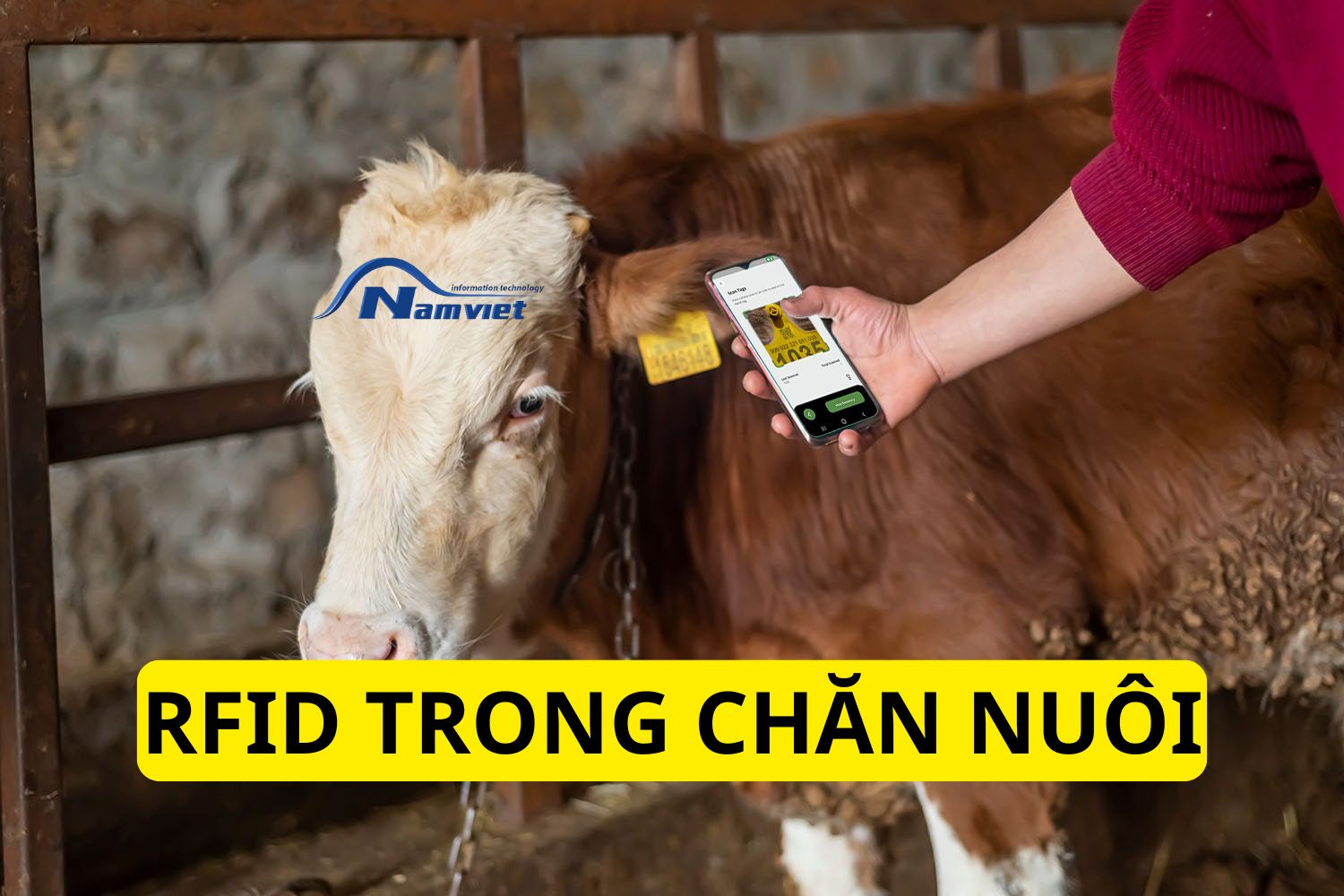
According to the 2025 agricultural industry report, labor costs in livestock farming account for 30-45% of total farm operating costs. RFID livestock management systems help reduce these costs by 35-45% through automating processes for individual tracking, weighing, vaccination, and market release. This technology is being widely deployed at medium-scale beef cattle, pig, and poultry farms in Vietnam.
How does the RFID system in livestock farming work?
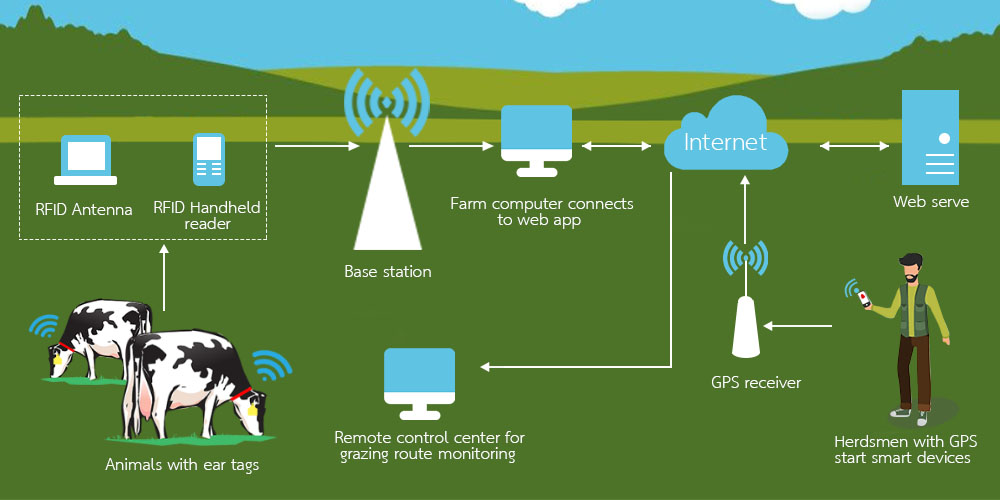
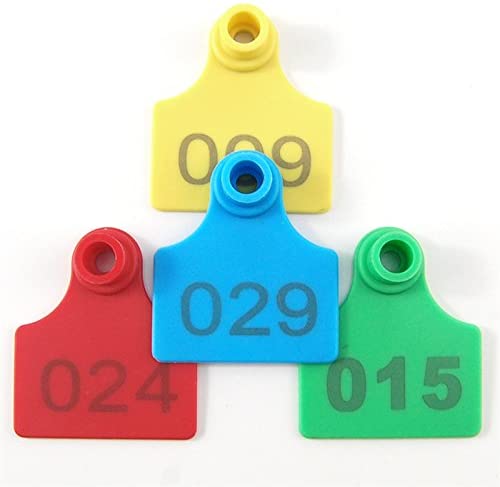
RFID (Radio Frequency Identification) uses radio waves to transmit information from tags attached to animals to readers. Each RFID ear tag contains a memory chip storing an individual ID code, birth date, vaccination history, and health indicators. When an animal passes through an area with a reader (pen gate, weighing scale), data is automatically collected and synced to management software.
The basic system consists of three main components: RFID tags (ear or collar), handheld or fixed readers, and herd management software. UHF RFID tags have a read range of 3-8 meters, allowing batch data collection as the herd passes through a gate. Fixed readers are typically installed at weighing areas, feeding troughs, or pen entrances, while handheld readers serve periodic checks.
An Ninh Số provides integrated solutions from HID Global/Zebra RFID tags to Honeywell readers, ensuring compatibility with existing farm management systems. Learn more about enterprise access control solutions 2026 to see the similarity in operating principles.
3 RFID system configurations for small and medium farms
Depending on herd size (200-2000 head) and budget, farm owners can choose one of three configurations: Basic (15-25 million VND), Standard (35-55 million VND), or Advanced (65-85 million VND). The comparison table below helps you make the right decision.
| Component | Basic Configuration | Standard Configuration | Advanced Configuration |
|---|---|---|---|
| Number of RFID tags | 200 UHF tags | 500 UHF tags | 1000 UHF tags |
| Fixed readers | 1 gate | 2 gates + 1 scale | 3 gates + 2 scales |
| Handheld readers | 1 device | 2 devices | 3 devices |
| Management software | Web basic | Web + Mobile | Cloud + API |
| Estimated cost | 15-25 million VND | 35-55 million VND | 65-85 million VND |
| Payback period | 12-15 months | 14-18 months | 16-20 months |
Specific ROI benefits when applying RFID
Labor costs decrease by 35-45% thanks to automation of weighing, recording, and sorting processes. Inspection time for a herd of 500 animals drops from 4-6 hours to 30-45 minutes. Loss rates due to errors or failure to detect disease in time decrease by 50-60%.
A 500-sow pig farm in Dong Nai recorded: after 14 months of deploying the RFID system, labor costs decreased by 42%, piglet survival rate increased by 12% thanks to accurate mother-offspring health monitoring. Market release time shortened by 30% due to real-time weight data updates.
Additionally, the system helps with traceability meeting VietGAP standards, reducing inspection document preparation time by 70%. Refer to the article on automatic control to understand similar benefits in other fields.
4-step deployment process for farms
Deploying an RFID system requires following a 4-step process: site survey, solution design, hardware installation, and trial operation. Each step takes 3-7 days depending on scale.
Step 1: Survey and assess current status
Technicians visit the farm to measure pen areas, entry/exit gates, and scale placement locations. Determine the number of head, livestock type, and current operating procedures.
Step 2: Design a customized solution
Based on survey data, the technical team proposes suitable tag, reader, and software configurations. Detailed quotation with deployment timeline.
Step 3: Installation and integration
Install RFID gates at strategic points (pen doors, weighing areas). Integrate electronic scales with readers. Train operational staff for 1-2 days.
Step 4: Trial operation and maintenance
Test the system with 5-10% of the herd for 3-5 days. Adjust read thresholds and software. Hand over operational documents and a semi-annual maintenance schedule.
Comparison of RFID with other herd management technologies
Compared to manual methods (paper records, barcode), RFID has outstanding advantages in read speed, accuracy, and automatic data collection capability. Barcode requires scanning each animal and is easily damaged in humid environments. Other wireless sensors cost 40-60% more.
The table below compares 3 common methods:
| Criteria | Manual | Barcode | RFID |
|---|---|---|---|
| Time to inspect 500 animals | 4-6 hours | 2-3 hours | 30-45 minutes |
| Data accuracy | 70-80% | 85-90% | 97-99% |
| Initial investment cost | 0-5 million VND | 10-20 million VND | 15-85 million VND |
| Annual operating cost | 40-60 million VND | 25-40 million VND | 8-15 million VND |
| Traceability capability | Difficult | Average | Easy |
Challenges and solutions when deploying RFID
Despite high efficiency, deploying RFID on Vietnamese farms faces some challenges: humid and dusty environments affecting read range, initial investment costs, and staff unfamiliar with technology. However, proven solutions exist.
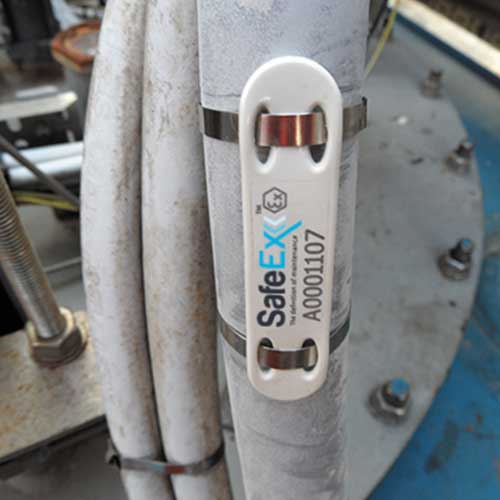
UHF RFID tags have IP67 waterproof/dustproof casing, operating stably in humid barn environments. Fixed readers should be installed in sheltered locations, away from large metals to avoid signal interference. Regarding costs, software subscription packages (SaaS) help reduce initial investment pressure, starting from only 3-5 million VND/year.
Staff training is conducted on-site at the farm for 1-2 days, accompanied by Vietnamese-language instruction manuals. An Ninh Số provides 24/7 remote technical support for the first 12 months. Learn more about integrated management solutions to see how we handle similar challenges.
Frequently Asked Questions
What is the investment cost for an RFID system for 200 animals?
The basic package for 200 animals ranges from 15-25 million VND, including 200 UHF tags, 1 handheld reader, and web basic software. Payback period is 12-15 months thanks to labor savings.
Are RFID tags harmful to animals?
RFID ear tags are specifically designed for livestock, made of soft plastic material that does not cause irritation. They weigh only 5-8 grams and do not affect normal activities. Millions of tags have been used globally with no reported harm.
Does the RFID system work in rain and dust?
Yes. Tags and readers meet IP67 standards, being dustproof and submersible in 1 meter of water for 30 minutes. Read range decreases by 10-15% in heavy rain but still ensures data collection.
How to integrate RFID with existing farm management software?
An Ninh Số's software supports open APIs, easily integrating with ERP systems and accounting software. The integration process takes 2-5 days depending on complexity, performed directly by the technical team.
What about warranty and technical support?
RFID tags have a 12-month warranty against manufacturer defects, readers have a 24-month warranty. 24/7 remote technical support is provided for the first year. Semi-annual maintenance costs 2-4 million VND per visit.
What is the minimum number of tags for the system to work effectively?
The system works effectively with a minimum of 100 tags. However, to optimize ROI, deployment is recommended for herds of 200 head or more.
Is it necessary to change barn infrastructure?
No major changes are needed. Only RFID gates need to be installed at entry/exit points or weighing areas. The gates can be mobile and do not affect barn structure.
Are you looking for an RFID livestock management solution for your farm? Contact the hotline 0796 700 777 now for consultation on a configuration suitable for your scale and budget. An Ninh Số provides turnkey solutions from RFID tags, readers, software to installation and maintenance. The technical team is ready for on-site surveys within 48 hours in Ho Chi Minh City and neighboring provinces.