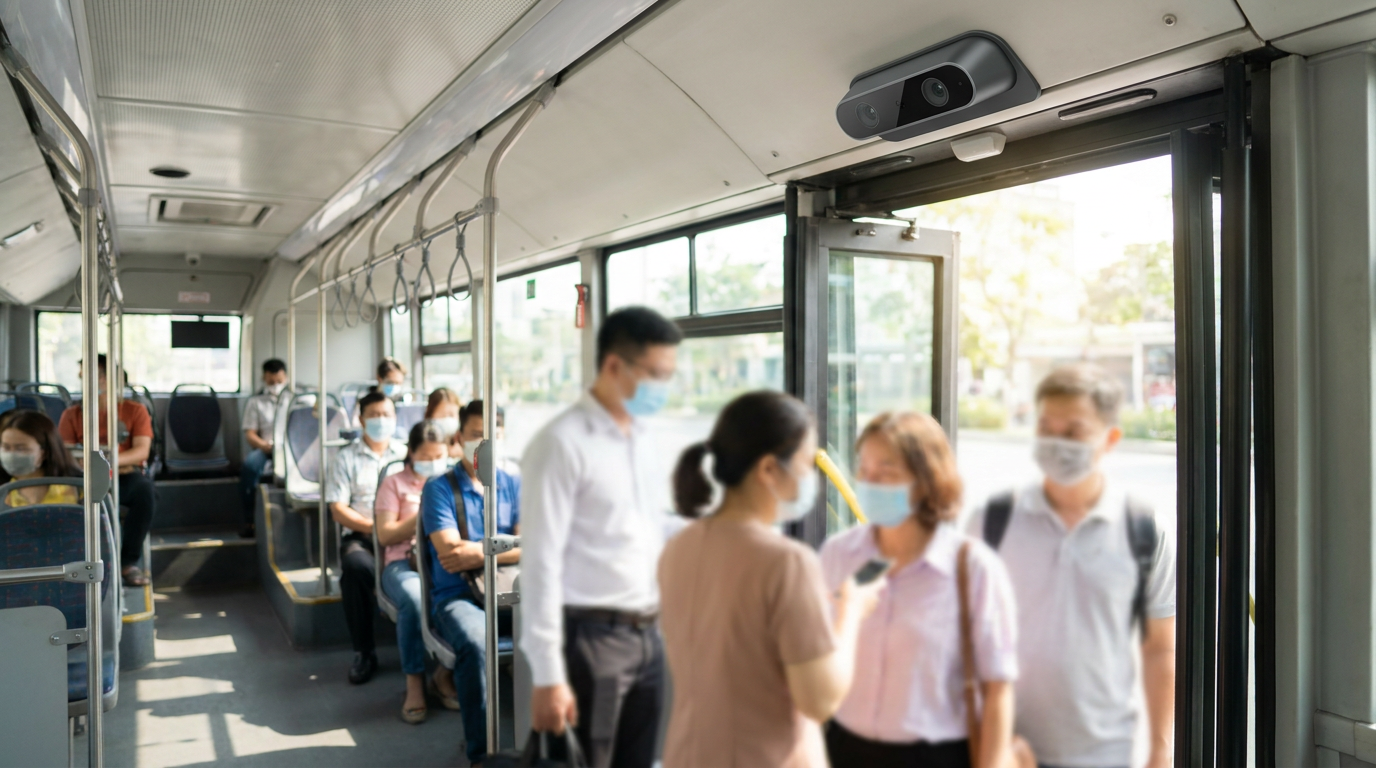
AI bus passenger counting cameras and infrared sensors are two popular solutions in Intelligent Transportation Systems (ITS). This article provides a detailed comparison between AI cameras using 3D stereo vision and traditional infrared sensors — based on accuracy, investment cost, maintenance, and noise immunity — to help transport business owners choose the right technology for their bus fleet.
What is an AI Bus Passenger Counting Camera?
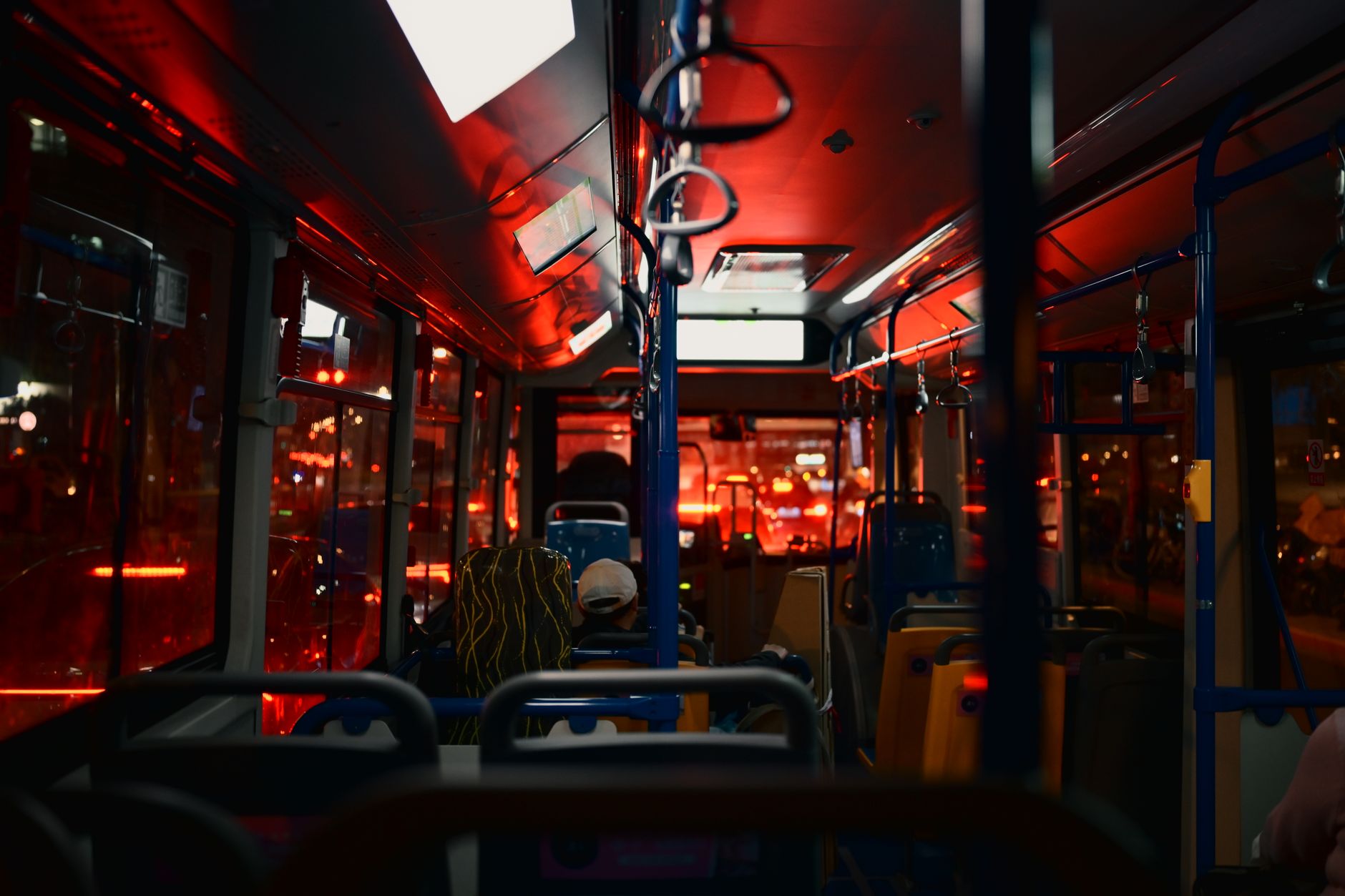
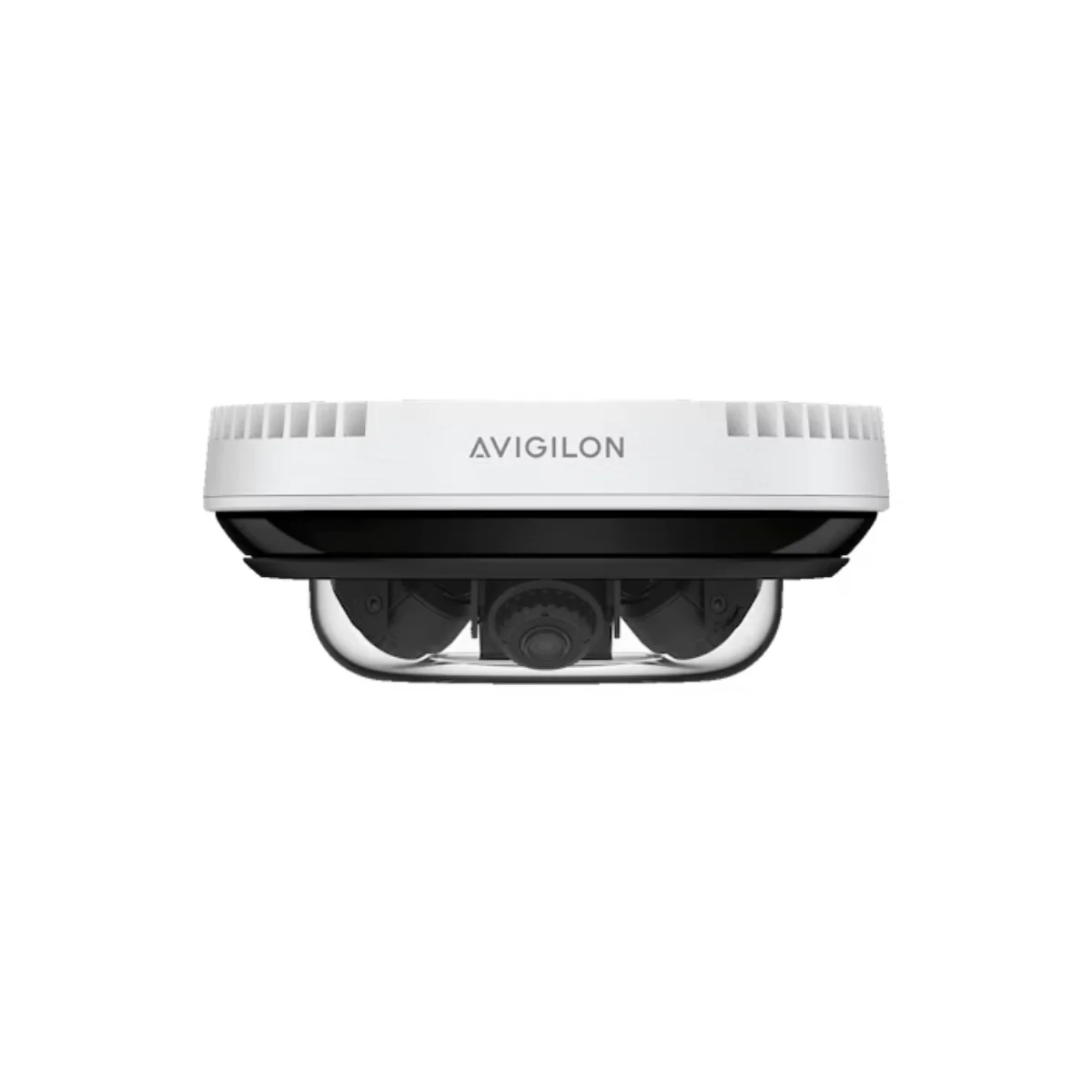
An AI passenger counting camera uses computer vision combined with deep learning algorithms to recognize and count the number of people boarding/alighting a bus in real time. The device typically comes in the form of 3D stereo vision or a single camera with integrated on-board AI, installed above the doorways.
The AI camera directly records the passenger flow, analyzes each frame to distinguish people from other objects (backpacks, suitcases), and counts accurately even in crowded conditions. In Vietnam, models like the Xovis PC3 or HPCM002 achieve 95-98% accuracy under changing light conditions.
Suitable for: Transport enterprises with large bus fleets that need real-time data to optimize routes and operational planning.
What is an Infrared Passenger Counting Sensor?
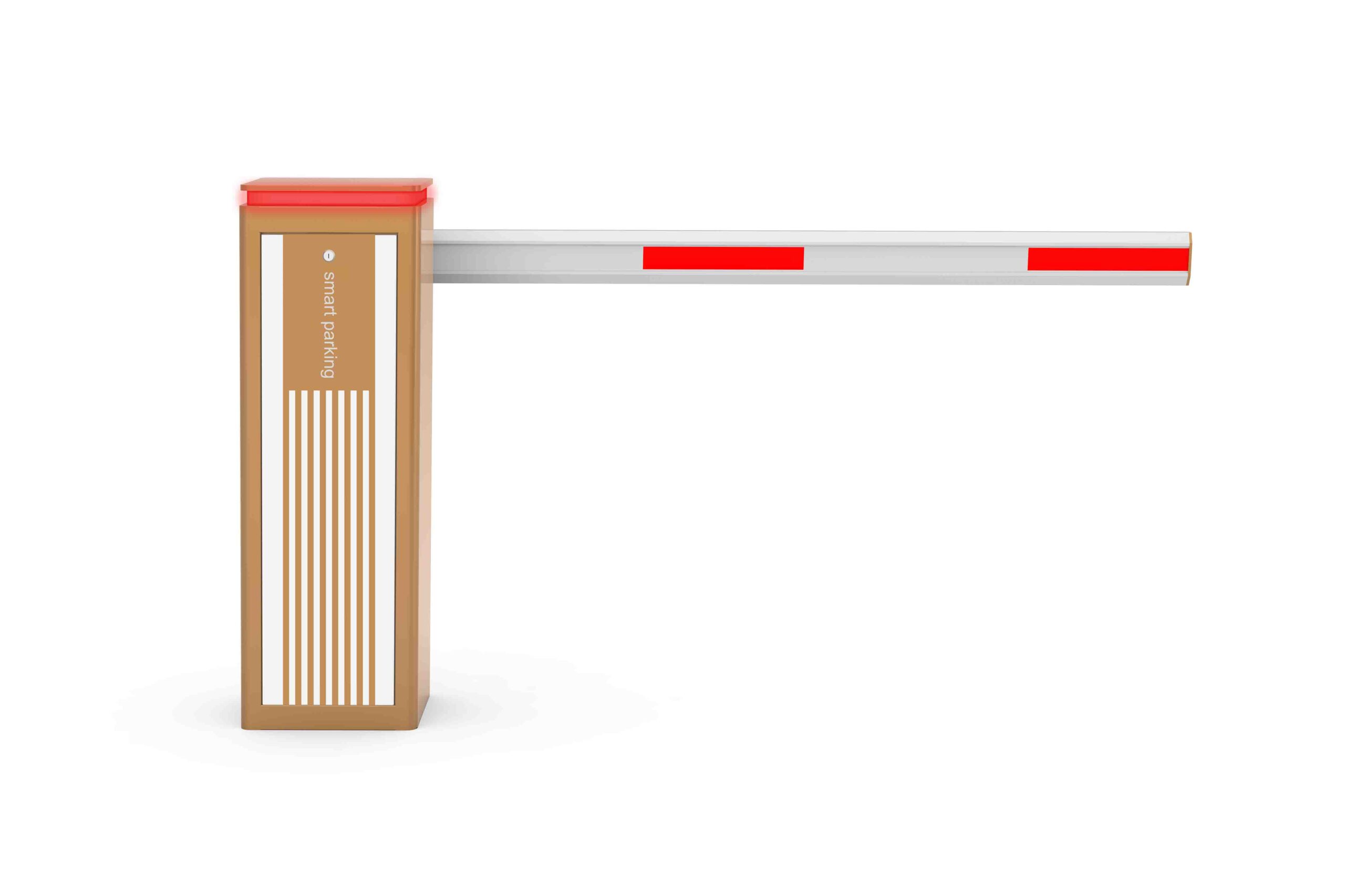
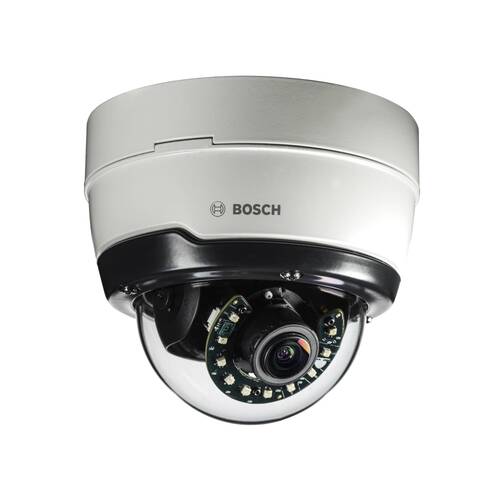

An infrared passenger counting sensor uses IR beams (typically 2-4 emitter-receiver pairs) installed on both sides of the bus door. When a passenger crosses the beam, the sensor registers a count. This technology is simple and inexpensive but is prone to interference from sunlight or multiple people passing simultaneously.
Traditional IR systems are commonly installed on older buses in Vietnam due to their low cost. However, accuracy only reaches 70-85% during peak hours because they cannot distinguish between passengers moving in the same direction or standing too close together.
Suitable for: Small businesses with tight budgets and basic counting needs that do not require high accuracy.
Detailed Comparison: AI Camera vs Infrared Sensor
The comparison table below contrasts 6 key criteria: accuracy, investment cost, maintenance, noise immunity, lighting requirements, and data integration. The AI camera excels in most criteria, while the infrared sensor has the advantage of lower initial cost.
| Criteria | AI Camera (3D/Deep Learning) | Infrared Sensor (IR) |
|---|---|---|
| Average Accuracy | 95-98% (best) | 70-85% |
| Initial Investment Cost | 8-15 million VND/camera | 1-3 million VND/set (best) |
| Annual Maintenance Cost | 5-10% of equipment value | 10-15% (frequent sensor cleaning) |
| Noise Immunity | High — AI filters noise from backpacks, suitcases | Low — prone to errors from sunlight, crowds |
| Lighting Requirements | Operates well in all conditions (best) | Affected by strong light |
| Real-time Data Integration | Yes — API/GPS/cloud (best) | Limited — usually only records counts |
Choosing by Real-World Use Case
Each type of public transport has different requirements. Below are 3 common use cases in Vietnam and recommended solutions.
Use Case 1: Crowded Inner-City Bus Route
Characteristics: 40-60 passengers per trip during peak hours, requiring accurate data to optimize frequency. Recommendation: AI Camera. 97%