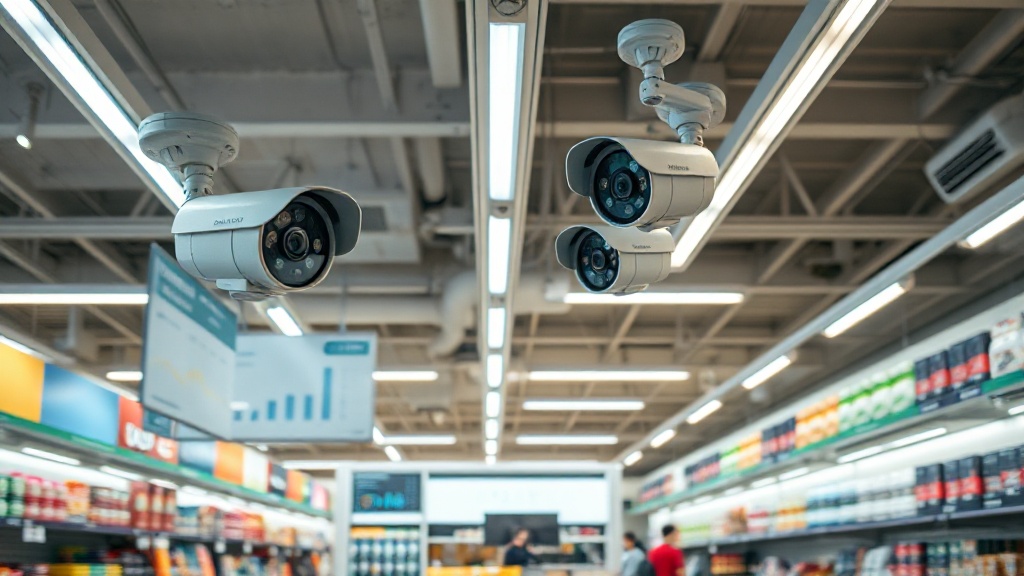
AI cameras for retail stores are surveillance camera systems integrated with artificial intelligence (Computer Vision), capable of automatically detecting, recognizing, and analyzing behavior in real-time. Unlike analog cameras that only record footage, AI cameras deliver three core values: loss prevention, business performance measurement, and operational optimization. In Vietnam, the investment cost for a basic AI camera system for a 50-100m² store ranges from 15-25 million VND, with an average payback period of 4-8 months.
How do AI cameras help prevent merchandise loss?
AI cameras detect abnormal behaviors such as hiding merchandise, moving items without passing through the checkout counter, or large gatherings in high-risk areas. The system sends real-time alerts to the manager's mobile device, helping reduce shrinkage by 60-80% according to surveys from retail chains applying this in Ho Chi Minh City and Hanoi.
Agentic AI cameras can learn and recognize typical fraudulent behavior patterns: customers intentionally covering cameras with hats/glasses, employees not scanning items at the POS, or unauthorized individuals entering the warehouse area. The system records and alerts immediately, allowing timely intervention. A case study at a mini-supermarket in District 7 (Ho Chi Minh City) showed that after 3 months of deploying agentic AI cameras reduced loss by 80%, equivalent to saving 35-45 million VND/month.
What are the benefits of people counting and customer behavior analysis?
AI cameras accurately count the number of customers entering and leaving in real-time, analyze movement paths within the store (heatmaps), and dwell time in front of each shelf. This data helps shop owners optimize product placement, evaluate promotion campaign effectiveness, and forecast staffing needs by time slot.
Systems like edge AI cameras process data directly on the device, ensuring latency under 200ms and independence from internet connectivity. People counting data can be directly integrated with sales management software to compare conversion rates for each campaign. For instance, if a Facebook ad campaign generates 500 views but only 30 customers enter the shop, the store owner immediately knows to adjust the content or target audience.
Early detection and alerting of abnormal behaviors
AI cameras detect 7 common types of abnormal behavior in retail stores: unauthorized entry after closing hours, large gatherings, fights, abandoned objects, smoke/fire, fence climbing, and abnormally fast movement. The system sends real-time alerts via the management app, helping minimize security and safety risks.
According to statistics from An Ninh Số, 65-70% of thefts in retail stores occur outside working hours. AI cameras with intrusion detection features automatically activate warning lights and send notifications to security or the shop owner within 5-10 seconds. Some high-end camera models like AI cameras for early smoke and fire detection can even prevent damage before a fire spreads, which is especially important for stores with warehouses containing flammable materials.
Optimizing store staffing and operations
Data from AI cameras helps store owners adjust employee work schedules according to peak hours, reducing unnecessary labor costs. The system also detects employees not standing in their designated positions, taking excessively long breaks, or engaging in fraudulent behavior at the checkout counter.
A real-world example: a convenience store chain with 15 locations in Da Nang reduced labor costs by 10-12% after 2 months of implementing AI cameras. Specifically, data showed that during the 2 PM - 4 PM slot, there were only 3-5 customers per hour, yet the store still staffed 2 employees. After adjusting to 1 employee and transferring staff to the evening shift, revenue remained unchanged while saving 18-22 million VND/month for the entire chain. Comparing Dahua vs Hikvision cameras for SMEs, both support employee behavior analysis, but Dahua has the advantage of being 15-20% cheaper for the same configuration.
Cost and ROI comparison between regular cameras and AI cameras
Regular analog cameras have a low initial investment cost (3-5 million VND for a 4-camera set) but lack analytical capabilities. AI cameras cost 3-5 times more but offer clear ROI through loss reduction, labor optimization, and increased revenue from understanding customer behavior.
| Criteria | Regular Analog Camera | Edge AI Camera | Cloud AI Camera |
|---|---|---|---|
| Investment cost (4 cameras) | 3-5 million VND | 18-25 million VND | 8-12 million VND + cloud fee 500k-1.5m VND/month |
| Loss prevention | No | Yes (reduces 60-80%) | Yes (reduces 50-70%) |
| People counting / Heatmap | No | Yes (real-time) | Yes (2-5 second latency) |
| Abnormal behavior detection | No | Yes (7 types) | Yes (5-7 types) |
| Internet dependency | No | No (local processing) | Yes |
| Estimated payback period | No ROI | 4-8 months | 6-12 months |
Benefits of AI cameras for marketing and customer experience
AI cameras provide data on customer age, gender, and emotions (happy, sad, surprised) when interacting with products. This information helps optimize displays, design menus, and evaluate the effectiveness of in-store advertising campaigns.
A specific application: AI cameras detect that female customers aged 25-35 stop for an average of 45 seconds in front of the cosmetics shelf but do not purchase. The shop owner can adjust the display, add a sales consultant, or attach a discount QR code right at the shelf. This data also supports negotiations with suppliers for prime shelf positions, increasing revenue by 15-25% for strategic items. Edge AI camera systems like those in the 2026 enterprise AI camera price list can integrate directly with CRM and POS platforms to automate marketing processes.
Integration with access control and loyalty customer management
AI cameras with facial recognition can automatically identify VIP customers upon entering the store, sending notifications to staff about the customer's preferences and purchase history. The system also manages access for employees and partners, replacing traditional card keys.
This solution is particularly effective for high-end fashion, cosmetics, or electronics chains. When a loyal customer enters, the AI camera sends a notification to the management app with information: "Mr. Minh (VIP Gold) — usually buys size L shirts, last visit 22 days ago." Staff can proactively greet and recommend suitable products. The system What is KSRV? An overview of enterprise access control shows that integrating AI cameras with turnstiles or barriers helps manage entry and exit effectively, preventing merchandise loss through employee exits.
Frequently Asked Questions
How much do AI cameras for retail stores cost?
Can AI cameras completely replace security guards?
Are AI people counting cameras accurate?
Does installing AI cameras in a store violate privacy rights?
Do AI cameras work during a power outage?
Do you want a consultation on AI camera solutions for your retail store that fit your scale and budget? Contact An Ninh Số immediately via hotline 0796 700 777 or email [email protected] for a free survey and detailed quote within 24 hours.