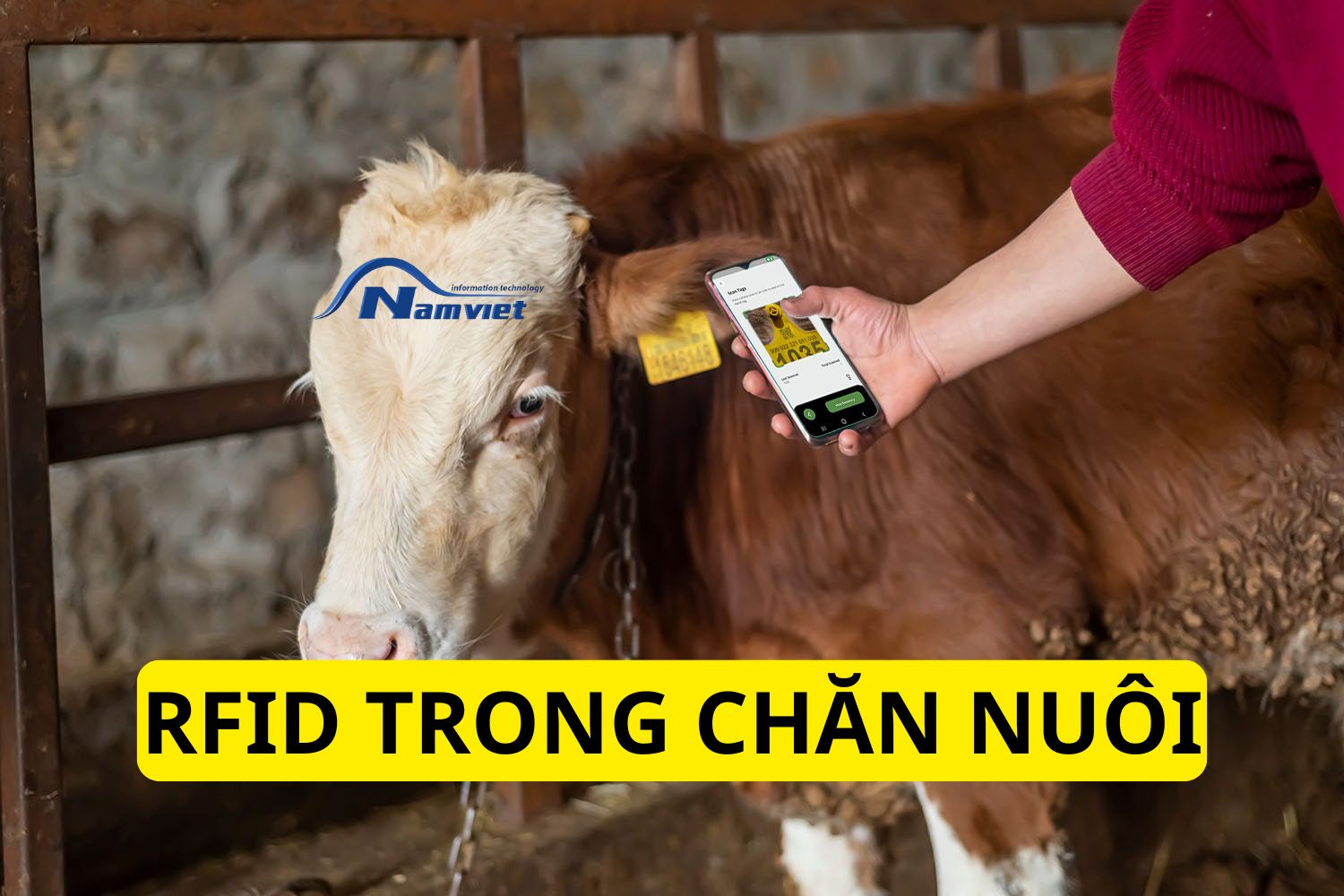
RFID (Radio Frequency Identification) and IoT (Internet of Things) sensors are two core technologies in smart livestock farming, but they serve different purposes: RFID focuses on identifying and managing individual livestock through ear tags, while IoT sensors monitor the barn environment (temperature, humidity, NH3 gas) in real time. In Vietnam, farms with 50-200 animals often face difficulties choosing a solution suitable for a budget of 15-150 million VND and limited infrastructure. This article provides a detailed comparison of the two technologies based on herd size, cost, and practical effectiveness.
What is RFID in livestock farming and how does it work?
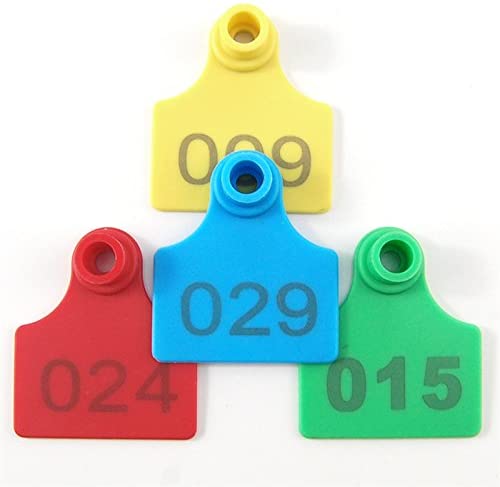
RFID is a system that uses radio waves to transmit data from tags attached to the ears or necks of livestock to a reader. Each tag contains an RFID chip and antenna, storing an individual ID code, vaccination history, date of birth, and medical information. When livestock pass through an area with a reader (barn gate, feeding trough), data is collected automatically, enabling individual animal management without manual intervention.
An RFID system in livestock farming consists of three main components: RFID tags (attached to livestock ears), handheld or fixed readers, and data management software. UHF RFID tags (860-960 MHz frequency) can be read from a distance of 3-8 meters, suitable for large herds. The RFID chip stores information such as ID code, vaccination date, weight – data that can be recorded multiple times throughout the animal's life. According to technical documentation from chiprfid.vn, livestock RFID tags are manufactured at temperatures up to 220°C, ensuring durability in harsh barn environments. Learn more about access control systems that can integrate with RFID to manage entry and exit to livestock areas.
What are IoT sensors in livestock farming and their practical applications?
IoT sensors are devices that measure temperature, humidity, NH3 gas concentration, CO2, and light intensity in barns, connecting via WiFi/LoRa/4G networks to transmit data to the cloud. The system allows farm owners to monitor and control equipment (fans, pumps, heat lamps) remotely via smartphone, helping maintain an optimal environment for livestock.
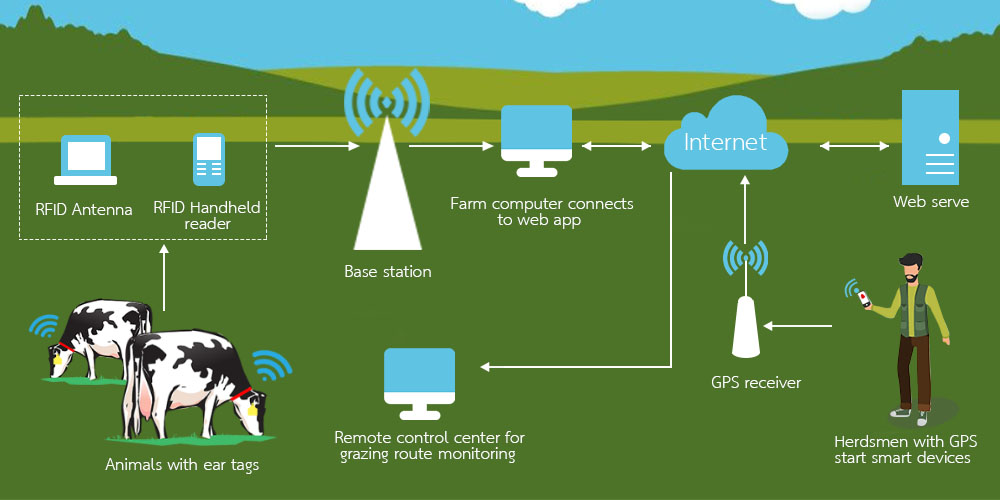
A typical IoT livestock system includes temperature/humidity sensors (DHT22, SHT30), gas sensors (NH3, CO2), a central controller (Raspberry Pi, PLC), and an internet gateway. Data is displayed on a web/app dashboard, triggering alerts when parameters exceed thresholds. For example: if the pig barn temperature exceeds 32°C, the system automatically turns on cooling fans. The investment cost for a 200m² farm ranges from 15-35 million VND, depending on the number of sensors and automation requirements. Smart monitoring solutions from An Ninh Số can integrate additional AI cameras to enhance observation.
Detailed comparison: RFID vs IoT Sensors – Pros and cons for Vietnamese farms
Both technologies aim for automation and productivity optimization, but differ in objectives: RFID manages individual animals (who, where, health status), while IoT sensors monitor the environment (temperature, humidity, toxic gases). The comparison table below helps you visualize more clearly based on common herd sizes in Vietnam (50-500 animals) and actual budgets.
| Criteria | RFID | IoT Sensors |
|---|---|---|
| Primary objective | Identification & individual management | Environmental monitoring & control |
| Application scope | Herd of 50-500 animals (cattle, pigs, goats) | Barn area 100-2000m² |
| Initial investment cost | 15-50 million VND (tags + readers + software) | 15-35 million VND (sensors + gateway + cloud) |
| Monthly operating cost | 2-5 million VND (tag batteries, maintenance) | 1-3 million VND (4G data, electricity, sensor replacement) |
| Infrastructure requirements | 220V power, no internet needed (offline) | Stable internet (WiFi/4G), 24/7 power |
| Deployment time | 2-4 days (attach tags + install readers) | 3-7 days (install sensors + configure cloud) |
| ROI (estimated) | Reduces 10-15% loss, increases 8-12% meat productivity | Reduces 15-20% mortality, saves 10-15% feed |
| Main disadvantages | No environmental monitoring; tags may fall off if poorly attached | Internet dependent; sensors require periodic calibration |
The table above shows that RFID is suitable when you need to know exactly which animal has been vaccinated, its weight, and how many times it has reproduced; while IoT sensors help maintain an ideal living environment, reducing disease. For a 200-pig farm, RFID costs about 25-35 million VND, while IoT for 3 barns of 600m² costs about 20-30 million VND. Refer to more about choosing Edge AI vs Cloud solutions for similar applications.
When should you choose RFID? Case study of a 200-animal farm
RFID is optimal for farms requiring strict individual management, especially dairy cows, breeding pigs, or reproductive goats. With a herd of 200 animals, investing in an RFID system helps reduce 10-15% loss through early disease detection, tracking breeding schedules, and optimizing feed rations per animal.
Case study: Tân Phát Dairy Farm (Đức Hòa, Long An) with a scale of 200 HF cows. Previously, staff spent 4-5 hours/day manually recording information for each animal (ear number, breeding date, milk yield). After installing the An Ninh Số RFID system (UHF ear tags + fixed readers at feeding troughs and milking area), data collection time dropped to 30-45 minutes/day. The investment cost was 28 million VND (200 tags + 2 readers + software), with payback after 8 months thanks to reducing 2 recording staff and increasing milk yield by 12% due to early detection of mastitis. Mr. Minh, the farm owner, shared: "Knowing exactly which cow needs to be separated, which one is ready for breeding – no more guessing." View the price list for enterprise AI cameras that can integrate additional visual monitoring for the farm.
When should you choose IoT sensors? Case study of a 500m² pig farm
IoT sensors are suitable for farms needing barn environment control, especially for fattening pigs and poultry – species sensitive to temperature, humidity, and toxic gases. For a 500m² barn, an IoT system helps reduce 15-20% mortality and saves 10-15% feed by maintaining optimal conditions.
Case study: Đồng Xanh Fattening Pig Farm (Bình Dương) with a scale of 300 pigs per batch, enclosed barn of 500m². Before applying IoT, the average mortality rate was 8-10%/batch due to sudden temperature spikes in summer. An Ninh Số deployed a system with 6 temperature/humidity sensors (SHT30), 2 NH3 sensors, a 4G gateway, and a web dashboard. When temperature exceeded 30°C, the system automatically turned on 4 exhaust fans and 2 misting machines. Results after 3 batches: mortality rate dropped to 3-5%, average slaughter weight increased by 5kg/pig, saving 12% in feed. Total investment was 22 million VND, with payback after 6 months. The system is monitored remotely via app, giving the farm owner peace of mind when away.
Combining RFID and IoT sensors: A comprehensive solution for large farms
For farms with 500 animals or more, or high-tech livestock farms, combining both RFID and IoT sensors delivers superior efficiency: RFID manages individual animals, IoT controls the environment – data integrated on a single platform optimizes the entire process.
A typical combined model: RFID tags attached to cattle/pig ears connect to readers at feeding troughs, while IoT sensors measure temperature and humidity in the barn. Data from both systems is consolidated in management software, allowing the farm owner to know: animal number X (RFID) is eating at trough number 2, while the barn temperature is 28°C (IoT). If that animal shows signs of fever (high body temperature), the system alerts for separation. The investment cost for a 500-animal farm is about 60-90 million VND (RFID 35 million + IoT 30 million + integration 15-25 million), but ROI can be achieved in 18-24 months thanks to reducing 20-25% in veterinary medicine costs and increasing 15-20% productivity. Refer to integrated control solutions for similar models.
Choosing the right solution based on scale and budget
There is no single solution for all farms. The choice depends on herd size, livestock type, budget, and priority goals: reducing individual loss (choose RFID) or controlling the environment (choose IoT), or both if investment conditions allow.
Quick selection guide: (1) Small farm 50-100 animals, budget under 20 million VND – prioritize basic IoT sensors (temperature/humidity + automatic fans) due to low cost and easy deployment. (2) Breeding pig/dairy cow farm 100-300 animals – prioritize RFID for breeding and individual health management, combined with basic IoT. (3) Large farm 300-500 animals, budget 50-100 million VND – invest in both integrated systems, prioritizing comprehensive automation. (4) Poultry farm (chickens, ducks) – only need IoT as tagging individual animals is difficult; RFID is not effective. An Ninh Số offers free consultation and surveys to provide the optimal solution for each farm.
Frequently Asked Questions
How are RFID and IoT sensors different in livestock farming?
RFID focuses on identifying individual livestock through ear tags, storing information such as ID code, vaccination history, weight – helping manage each animal individually. IoT sensors measure the barn environment (temperature, humidity, NH3 gas) and control equipment automatically. The two technologies complement each other: RFID manages "who," IoT manages "where and how."
What is the investment cost for an RFID system for a 200-animal farm?
The cost is approximately 25-35 million VND, including 200 UHF RFID tags (about 50-70 thousand VND/tag), 1-2 fixed readers (8-12 million VND/unit), and management software (5-8 million VND). Excluding installation costs of 2-4 million VND. Estimated payback period is 8-12 months thanks to reduced recording labor and increased productivity.
Can IoT sensors work in areas without internet?
They can operate offline if using a LoRa gateway (connection range 2-5 km) or storing data locally on an SD card. However, for remote monitoring and receiving alerts via smartphone, 4G or WiFi internet is required. A common solution is using a 4G gateway with a data SIM, costing about 200-500 thousand VND/month.
Can RFID and IoT sensors be combined on the same platform?
Absolutely. Many farm management software solutions (Herdsman, AgriWebb, or custom solutions from An Ninh Số) support integrating data from both systems. RFID data (animal ID, weight) and IoT data (temperature, humidity) are displayed on the same dashboard, allowing the farm owner to make quick decisions. Integration costs an additional 15-25 million VND.
Do RFID tags affect livestock health?
No. RFID tags are designed to be lightweight (15-25 grams), attached externally to the ear using specialized plastic clips, and are non-invasive. The RFID chip does not emit continuously – it only activates when triggered by a reader, with very low energy (under 1W). Millions of livestock worldwide have worn RFID tags with no recorded negative effects.
Are you torn between RFID and IoT sensors for your farm? Contact An Ninh Số immediately via hotline 0796 700 777 for free consultation, on-site survey, and a detailed quote within 24 hours. We have experience deploying solutions for over 50 farms in Vietnam.