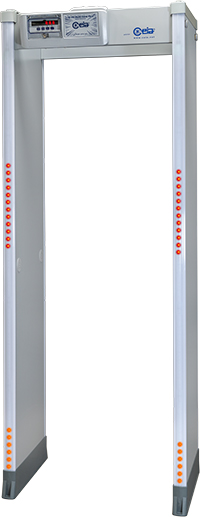
CEIA SMD600 is a premium-tier Italian industrial metal detector — competing directly with the Mettler-Toledo Profile Advantage and Anritsu DualHead. Position: EU quality at the same tier but 15-20% lower cost than Mettler.
Technical strengths: (1) Multi-frequency — auto-tune per product (products with high salt/moisture such as sushi, ham, cheese that cause interference in traditional PMD); (2) Auto-tuning Continuous Wave — no technician recalibration needed when switching product lines; (3) Sensitivity stainless 0.5mm — capable of detecting small broken kitchen knife fragments.
Primary use cases: F&B lines (fermented pork, sausage, confectionery) at Japanese/Korean FDI factories, pharma capsule lines, baby food. Integrates with GP7 Product Security Control via reject mechanism + audit log → ISO 22000 / BRC.
| Technology | Multi-frequency electromagnetic, auto-tuning |
|---|---|
| Sensitivity Fe | 0.3-0.5mm sphere (depending on product type + aperture) |
| Sensitivity non-Fe | 0.4-0.6mm sphere |
| Sensitivity stainless | 0.5-1.0mm sphere (304/316 types) |
| Aperture sizes | 100×50, 200×100, 400×200, 600×300, 800×400 mm |
| Belt speed | 5-150 m/min (depending on aperture) |
| Display | 10" touchscreen, multi-language including Vietnamese |
| Compliance | FDA 21 CFR 117, HACCP, IFS, BRC, ISO 22000 |
| Reject options | Air blast, pneumatic push, flap, retract belt, stop-belt |
- Processed food factories (sausage, fermented pork, ham, cheese)
- Confectionery / snack lines — wrap film inspection
- Pharma capsule + tablet — FDA 21 CFR 117 standard
- Baby food — max sensitivity + dual reject confirmation
- Pet food — bulk grain + meat protein inspection
Frequently Asked Questions
- CEIA vs Mettler-Toledo — which to choose?
Both are premium EU tier. CEIA is stronger on products with high salt/moisture (sushi, ham) thanks to multi-frequency tuning. Mettler-Toledo is stronger on integrated X-ray inspection combo. CEIA cost is -15-20%. An Ninh Số advises based on the specific product line.
- Which aperture suits a 200mm wide line?
Recommended aperture 400×200 for a 200mm wide belt — 100mm buffer on each side to avoid edge effect. An aperture that is too tight (200×100) will cause many false alarms when product moves unevenly.
- Lead time?
An Ninh Số HCM warehouse stock for common apertures (200×100, 400×200): 2-3 weeks. Custom large apertures (600×300+): 8-12 weeks from Italy. Recommended to plan ahead of line commissioning.
| Technology | Multi-frequency electromagnetic, auto-tuning |
|---|---|
| Sensitivity Fe | 0.3-0.5mm sphere (tuỳ product type + aperture) |
| Sensitivity non-Fe | 0.4-0.6mm sphere |
| Sensitivity stainless | 0.5-1.0mm sphere (loại 304/316) |
| Aperture sizes | 100×50, 200×100, 400×200, 600×300, 800×400 mm |
| Belt speed | 5-150 m/min (tuỳ aperture) |
| Display | 10" touchscreen, multi-language gồm tiếng Việt |
| Compliance | FDA 21 CFR 117, HACCP, IFS, BRC, ISO 22000 |
| Reject options | Air blast, pneumatic push, flap, retract belt, stop-belt |
- Nhà máy thực phẩm chế biến (xúc xích, nem, ham, cheese)
- Dây chuyền bánh kẹo / snack — wrap film inspection
- Pharma capsule + tablet — chuẩn FDA 21 CFR 117
- Baby food — sensitivity max + dual reject confirmation
- Pet food — bulk grain + meat protein inspection
Câu hỏi thường gặp
- CEIA vs Mettler-Toledo — which to choose?
Both are premium EU tier. CEIA is stronger on products with high salt/moisture (sushi, ham) thanks to multi-frequency tuning. Mettler-Toledo is stronger on integrated X-ray inspection combo. CEIA cost is 15-20% lower. An Ninh Số advises based on the specific product line.
- Which aperture suits a 200mm wide line?
Recommended aperture 400×200 for a 200mm wide belt — 100mm buffer on each side to avoid edge effect. An aperture that is too tight (200×100) will cause many false alarms when product moves unevenly.
- Lead time?
An Ninh Số HCM warehouse stock for common apertures (200×100, 400×200): 2-3 weeks. Custom large apertures (600×300+): 8-12 weeks from Italy. Recommended to plan ahead of line commissioning.